Espresso machines
Sour vs bitter espresso: how to tell which it is and which way to change it
Read taste and flow together, then follow each maker's own direction for a sour or a bitter shot. Covers the shot that tastes both and what eight machines let you change.
Assessment based on manufacturer documentation and independent published sources; we have not physically tested these products.
By Syed Hyder Ali · Updated · How we research
In short
A sour, thin shot that runs fast usually needs a finer grind; a bitter, harsh shot that runs slow usually needs a coarser one. Taste alone can mislead, so read the taste together with how fast the espresso flows, and change one thing at a time. If grinding does not help, check the basket type, the age of the beans and whether the machine is clean.
Worked example
- Shot (hypothetical)
- Starts flowing 4 seconds after you press brew
- Look (hypothetical)
- Thin, pale crema; pale brown espresso
- Taste (hypothetical)
- Sharp and watery
- Table used
- Bambino Plus BES500 instruction book, Extraction tips
Flow after 1-6 seconds, fast like water, thin pale crema and pale brown espresso is Breville's under extraction. Its solution: grind finer, control the dose, tamp 22-33 lb (10-15 kg), adjust and re-test.
1 change: grind finer, then re-test
Breville's 8-12 seconds is that manual's time to first flow; other manuals time something else (see the last section). A re-tested shot that starts flowing after 10 seconds with golden-brown crema sits inside that manual's correct window.
Assumptions and exclusions
This assumes
- Fresh beans and a clean machine
- A grinder that can go finer or coarser
- A single-wall basket, not a dual-wall one
This does not cover
- The dial-in procedure and dose or ratio recipes
- Machine faults such as no flow or leaks
- Roast and bean choice; health or caffeine questions
Is your espresso sour or bitter, and what does each mean?
"Sour" and "bitter" are what you taste. "Under-extracted" and "over-extracted" are the makers' words for the shot that caused them: water ran through the coffee too fast and took too little, or too slowly and took too much. The reliable way to tell which you have is flow and taste together, because taste alone can mislead. Breville's own instruction book shows why.
| What you see | Under extraction | Correct extraction | Over extraction |
|---|---|---|---|
Flow starts after | 1-6 seconds | 8-12 seconds | 12 seconds |
Flow looks | Fast like water | Slow like warm honey | Drips or not at all |
Crema | Thin and pale | Golden brown, fine mousse | Dark and spotty |
Espresso colour | Pale brown | Dark brown | Very dark brown |
Taste, as the table words it | "bitter/sharp, weak and watery" | Not listed | "bitter and burnt" |
Taste, as the chart below it words it | "underdeveloped, sour" | "balanced" | "bitter, astringent" |
The same page labels the under-extracted shot "bitter/sharp" in its table and "sour" in its chart. So a thin, fast shot can taste sharp enough to read as bitter, and a flow that is fast and watery is the more dependable signal. If you taste bitterness but the shot ran fast and pale, treat it as under-extracted first. If a finer grind does not fix it, check the age of the beans next: Breville says stale coffee pours too quickly and tastes bitter and watery.
What do you change first when it is sour?
Grind finer, and change one thing at a time. That is the direction every maker here gives, in its own words:
- Baratza lists "Sour, thin, fast shot" with the solution "Grind finer", and says to keep the dose consistent and adjust in small increments.
- Breville and Gaggia give the same direction for a shot that runs fast: a finer grind first, then the dose and the tamp, one at a time. Their own fast-shot rows, with the tamp range, are in the table in how to dial in espresso.
- De'Longhi lists "The coffee is weak or not creamy enough" in the Magnifica Evo manual with "Coffee ground too coarsely" as a cause: adjust the grinding level, and turn the dial one click towards "1" for a fuller, creamier coffee. The change shows only after at least 2 coffees. It also lists coffee that is not fresh, a pack opened too long.
Seattle Coffee Gear, a US retailer, adds causes that are not the grind: a dose too low for the basket, water below the 195-205 °F range it names, and coffee so fresh off the roast it is still off-gassing, which it says to rest a few more days. The procedure that turns a direction into a recipe is in how to dial in espresso.
What do you change first when it is bitter?
Grind coarser, again one change at a time.
- Baratza lists "Bitter, harsh, slow shot" with "Grind coarser".
- Breville describes a grind as fine as flour as one that will not let water through even under pressure, so the espresso is over-extracted, dark and bitter. Its slow-shot row, with the dose and tamp fixes, is in how to dial in espresso.
- De'Longhi lists "The coffee emerges too slowly or drop-by-drop" with "Coffee ground too finely": adjust the grinding level, one click towards "7" (the manual's own words for a coffee delivered too slowly).
- Gaggia says that after steaming you must cool the boiler by running water through the group before brewing, "otherwise, the coffee may taste burnt" (E24 manual). That is a temperature cause, not a grind cause, and how to steam milk shows where it falls in a milk drink.
Breville's general-coffee page on bitterness, which is not specific to espresso, says over-extraction is the most common cause and that "a coarser grind could be a simple fix". It adds that hotter water extracts more of the bitter compounds, gives 195-205 °F as the range that gets full flavour without tipping into bitterness, and warns, about shortening brew time, "Don't go too far—you don't want to trade bitterness for a weak or sour brew." Seattle Coffee Gear lists a dose that is too high and a shot running well past 35 seconds as other causes. What "finer" and "coarser" look like is in espresso grind size explained.
What if it tastes both, or grinding does not help?
Five checks come before another grind change.
- It tastes both sour and bitter. Seattle Coffee Gear says a shot can taste both at once, and calls it a sign of channeling, water flowing unevenly through the puck. Baratza lists channeling as its own problem and says the fix is puck preparation, distribution and tamp: "The grinder isn't usually the cause." Both are reports. Breville's Barista Express book names channeling too: it says to wipe the portafilter and basket dry before dosing, because moisture can encourage it. Quick check: dry both, then pull the shot again.
- The basket hides the grind. Breville says its dual-wall baskets "regulate the pressure and helps to optimise the extraction regardless of the grind, dose and tamp pressure or freshness", so a grind change shows up less on them. What dual-wall baskets do explains why.
- The beans are old, or very fresh. Breville says beans are best between 5 and 20 days after the "Roasted On" date and that stale coffee "may pour too quickly from the portafilter spouts and taste bitter and watery". Seattle Coffee Gear says very fresh coffee can taste sour. Baratza and Breville read a fast pour differently (see the last section).
- The setup is dirty. Seattle Coffee Gear says a dirty portafilter, basket or group head with rancid oil gives a persistent, flat bitterness no grind change fixes. the Bambino Plus prompts a cleaning cycle after 200 extractions, and Gaggia's manual says to wash the filters every day. How to clean an espresso machine has the steps.
- The grinder cannot go far enough. Tom's Guide (May 8, 2025) reports that the Breville (Sage) grinder it names the Dose Control Pro could not grind fine enough to reach a 25-28 second shot on its Bambino Plus; even with the inner burr adjusted, the shot ran in 15 seconds. The reviewer adds, "Don't get me wrong, those shots still tasted good", and recommends a more robust grinder such as the Comandante C40 MK4 or the Eureka Mignon Specialita, which reached 36.1 g in 25 seconds. A fast shot is therefore not always a sour one. That is one reviewer's unit, and Sage is Breville's name in other markets. Choose a grinder when yours runs out of range.
If there is no flow, it drips, or the machine makes a noise, you have a fault rather than a taste problem; espresso machine troubleshooting covers it.
What can your machine actually change?
Of the four instruction books (Bambino Plus, Barista Express, Gaggia Classic E24, De'Longhi Magnifica Evo), only Breville's use the words sour and bitter for taste; the Gaggia and De'Longhi manuals describe the same faults as flow, weakness and colour. What you can change depends on the machine:
| Machine | Grinder | Brew temperature | Shot control | Baskets |
|---|---|---|---|---|
None; you need a grinder | None described in the US manual | Preset 1 fl oz and 2 fl oz; programmable volume; manual pre-infusion | Single-wall and dual-wall | |
Built in, 16 settings | PID, ±4 °F in 2 °F steps | Preset volumes; grind amount adjustable | Single-wall and dual-wall | |
None; you need a grinder | Indicator lights; no adjustment described | You start and stop the shot | Pressurized and traditional | |
Built in; dial turned one click at a time | Three coffee temperatures | Three strengths; quantity programmable | Not applicable | |
Built in, 12 settings | 3 temperature settings | 3 aroma strengths; coffee length adjustable | Not applicable | |
Built in, 7 levels | Programmable in 3 levels | Strength in 10 levels | Not applicable | |
Gaggia Anima | Built in, 5 settings, adjusted while grinding | 3 temperature levels | 5 aroma strengths; adjustable coffee length | Not applicable |
None; you need a grinder | PID; no user setting described | You start and stop the shot | 51 mm dual-wall only |
The consequence: on a machine with no grinder, a sour or bitter shot is fixed at your grinder, and a dual-wall-only basket such as the CASABREWS's masks some of what the grinder does. On a machine with a built-in grinder, the dial you turn is the one in the table. Only the Barista Express lists a brew-temperature adjustment among the semi-automatics here; on the others, temperature causes (cold water, a hot boiler after steaming) are not yours to set.
Why do the makers' numbers differ?
Each manual times its own thing, so read the numbers inside one maker's page and never mix them. None is a universal target.
- Bambino Plus manual: time to first flow. Correct 8-12 seconds, under extraction 1-6 seconds, over extraction after 12 seconds. The same book's text says under 7 seconds is under-extracted and no flow after 12 seconds is over-extracted, so 6 to 7 seconds sits in neither.
- Barista Express book: two clocks, and they disagree. Its "The Grind" page (p.18) says flow starts after 4-7 seconds, under 3 seconds means under-extraction and no flow after 8 seconds means over-extraction. Its extraction guide (p.20) gives 8-12 seconds for correct extraction, plus a whole-shot clock: 25-30 seconds correct, up to 20 seconds under, more than 35 seconds over.
- Baratza: a whole-shot clock for its own test recipe, 25-32 seconds from start to finish.
- Gaggia: a lower limit for the E24, "less than 20 seconds" as a fault.
Two further conflicts: Breville's under-extraction column says "bitter/sharp" where its chart says sour, and Breville says stale coffee pours too fast and tastes bitter where Baratza ties a fast shot to sour. This page prints no number without its maker, and no maker document gives a shot time or temperature that applies to every machine.
Models this page mentions
We may earn a commission when you buy through links on this page.
In the order the page mentions them; not a ranking.
Mentioned in: Is your espresso sour or bitter, and what does each mean?
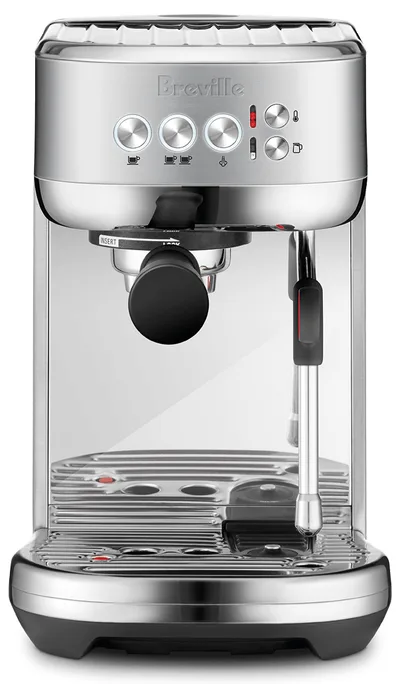
Breville the Bambino Plus
Mentioned in: What do you change first when it is bitter?
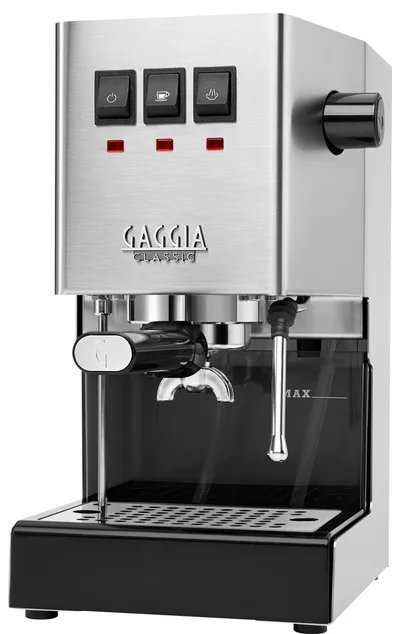
Gaggia Classic Pro E24
Mentioned in: What if it tastes both, or grinding does not help?
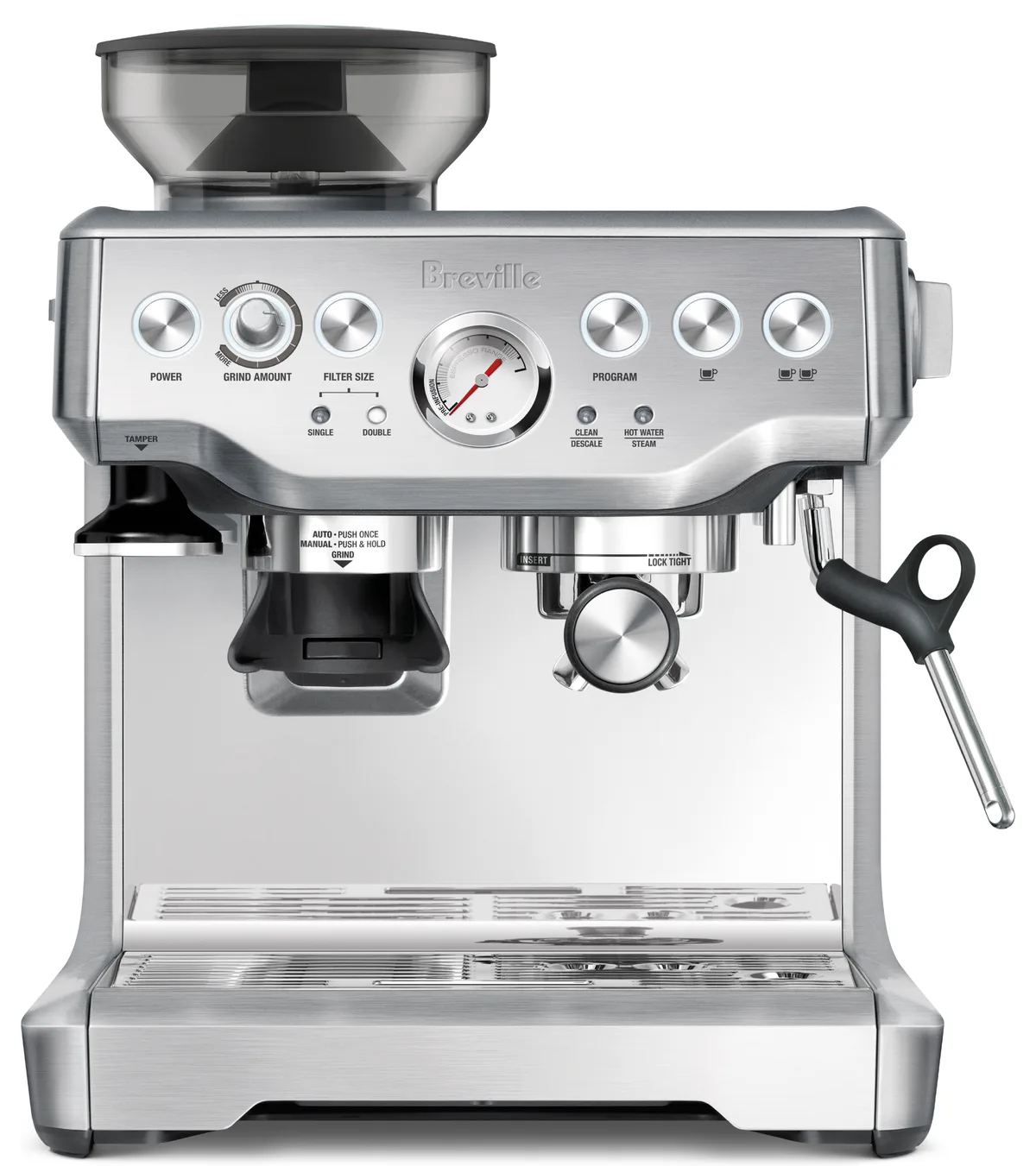
Breville the Barista Express
Frequently asked questions
What is the 10 second rule for espresso?
Can sour and bitter happen in one shot?
Sources
- Bambino Plus BES500 instruction book (US, Y25), pp.11, 12, 16, 20-22 — Breville, accessed November 17, 2026
- Barista Express BES870 instruction book (US, X26), pp.18 and 20 — Breville, accessed November 17, 2026
- Dialing in Espresso: Burr Types, Adjustments, and Troubleshooting — Baratza, accessed November 17, 2026
- Bitter coffee: Why it happens & how to fix it — Breville US, accessed November 17, 2026
- Gaggia Classic E24 operating instructions, USA (6420-010-18419), pp.19-20 and 23 — Gaggia, accessed November 17, 2026
- Magnifica Evo ECAM29084 instructions for use, US (asset 282340): adjusting the coffee grinder; troubleshooting — De'Longhi, accessed November 17, 2026
- Why Does My Espresso Taste Sour or Bitter? — Seattle Coffee Gear, accessed November 17, 2026
- Breville Bambino Plus review: The reigning entry-level champ (published May 8, 2025) — Tom's Guide, accessed November 17, 2026
- Series 3200 EP3241/74 product leaflet (US) — Philips, accessed November 17, 2026
- JURA E8 (NAD) product page — JURA USA, accessed November 17, 2026
- Gaggia Anima instruction manual, section 5.3.3 grinder adjustment — Gaggia, accessed November 17, 2026
- CM5418 instruction manual (EN/ES) — CASABREWS, accessed November 17, 2026