Accessories
How to steam milk: the steps your machine's maker publishes
Pick your machine's milk system, follow its maker's steps, and see the stop temperatures and steaming limits each maker lists. Covers wands, assisted wands, a milk carafe and two frothers.
Assessment based on manufacturer documentation and independent published sources; we have not physically tested these products.
By Syed Hyder Ali · Updated · How we research
In short
How to steam milk depends on your milk system. On a manual steam wand, Breville's instruction books say to start with fresh cold milk, purge the wand, put the tip 1-2 cm under the surface at one side until the milk spins, lower the jug so air enters, stop when the jug is hot to touch (60-65 °C), and turn the steam off before lifting the wand. On an assisted wand such as the Bambino Plus you choose temperature and foam and the machine stops itself, but only in the jug supplied in the box. Gaggia, Rancilio, CASABREWS and De'Longhi word the steps and the stop point differently, so your own maker's book comes first.
Worked example
- Jug in the Bambino Plus box
- 16 fl oz (480 mL)
- Breville's rule for one cappuccino
- milk a third of the jug
16 fl oz ÷ 3 = 5.3 fl oz; 480 mL ÷ 3 = 160 mL
≈ 5.3 fl oz (≈ 160 mL) of cold milk for one cappuccino
Arithmetic from Breville's cappuccino rule and the Bambino Plus jug. Breville's recipe page names no jug size, so this applies its rule to the Bambino Plus jug. The Bambino Plus book says to fill between the MIN and MAX marks and lists no volume for either, so if a third of the jug would sit below MIN, fill to MIN. Breville's latte recipe fills to the bottom of the spout instead.
Assumptions and exclusions
This assumes
- A US machine of the models named
- Fresh cold milk
- The maker's own jug on an assisted wand
This does not cover
- Latte art and plant-milk results
- The drink's ratios and cup sizes
- Microwave, jar and French-press methods
- Cleaning beyond each maker's wipe and purge
How do you steam milk, according to your machine's maker?
Start from the milk system your machine has, because the steps and the stop rule change with it:
- A manual steam wand you control. Breville Bambino, Barista Express, Express Impress, Barista Pro and Dual Boiler; Gaggia Classic Pro; Rancilio Silvia; CASABREWS CM5418. Follow Breville's steps, then the differences table, in the manual-wand section below.
- A "cappuccino maker" sleeve. De'Longhi Dedica and Stilosa. The steps are in the differences table, not Breville's list.
- An assisted wand. Breville Bambino Plus, Barista Touch, Barista Touch Impress and Oracle Jet. You choose temperature and foam, and the machine stops itself.
- A milk carafe. De'Longhi Magnifica Evo. It delivers all the milk you put in.
- A stand-alone frother. Nespresso Aeroccino 4 and Breville Milk Café, which need no espresso machine.
This page covers the milk. For the drink built around it, see making a latte at home; for what each drink is, espresso drink types.
What do you need before you start?
Every maker that states a milk temperature at the start says cold: Breville says "fresh cold milk", Gaggia "fresh whole milk at a cold temperature", De'Longhi milk at refrigerator temperature (about 5 °C), CASABREWS cold whole milk, and Rancilio asks you to store milk at 5 °C (41 °F) or below. Start from the fridge.
The jug matters more than most buyers expect. Breville's books for the Bambino Plus, Barista Pro, Barista Touch and Barista Touch Impress each say to use the stainless steel milk jug that came with the machine; the Bambino Plus and Barista Pro books say "Use only the supplied stainless steel milk jug", and the Touch books name glass and plastic containers as a danger. So on those four, a jug bought separately is not the one Breville's book tells you to use. The Gaggia Classic Pro, Rancilio Silvia, CASABREWS CM5418 and De'Longhi Stilosa list no milk jug in the box, so those owners buy one. Gaggia's book describes what it wants: stainless steel, circular, narrower at the top, with a spout. CASABREWS names a diameter of 70-75 mm and a jug tall enough for the milk to double. Jugs and frothers are grouped under coffee accessories.
How do you steam milk with a manual steam wand?
These are the steps in Breville's Barista Express instruction book (BES870, p.15 and p.19):
- Start with fresh cold milk and fill the jug just below the "V" at the bottom of the spout.
- With the tip over the drip tray, turn the dial to STEAM and wait until the steam light stops flashing. Some condensed water may purge; that is normal.
- Pause the steam by returning the dial to STANDBY. Within 8 seconds, put the tip ¼-¾ in (1-2 cm) below the surface, close to the right-hand side of the jug at the 3 o'clock position, and turn the dial back to STEAM. The pause lasts 8 seconds only.
- Keep the tip just under the surface until the milk spins clockwise.
- With the milk spinning, slowly lower the jug so the tip reaches the surface and air enters. You may need to break the surface gently to get it spinning fast enough.
- Keep the tip at or slightly below the surface, maintaining the spin, until there is enough volume.
- Lift the jug to bring the tip under the surface and keep the milk spinning. The milk is at temperature, 140-149 °F (60-65 °C), when the jug is hot to touch.
- Turn the steam off before taking the tip out of the milk.
- Wipe the wand at once with a damp cloth, then briefly turn steam on over the drip tray to clear milk from inside it.
- Tap the jug on the bench, swirl it, and pour straight into the espresso. Breville says to work quickly, before the milk separates.
Other Breville machines change one thing at a time. The Bambino (BES450) uses a steam button, and you press any button to stop. The Barista Express Impress (BES876) keeps the 8-second pause and fills between MIN and MAX. The Barista Pro (BES878) uses a steam dial with no pause step and also fills between MIN and MAX. The Dual Boiler (BES920) uses a steam lever, with no pause step. Gaggia, Rancilio, CASABREWS and De'Longhi differ more:
| Maker and model | Before steaming | Tip position | When to stop | Afterwards |
|---|---|---|---|---|
Gaggia Classic Pro (E24) | Press the steam button; at 15-20 seconds, when the steam light comes on, open the knob slightly to clear condensation. | Just below the surface, near the edge, at an angle, in the milk and not the froth; raise the jug as froth grows, then push the nozzle deeper to heat. | Keep a hand on the jug to feel the temperature rise. No temperature listed. Steam no longer than 60 seconds. | Close the knob; tap the jug and rest it at least 30 seconds; do not reuse leftover hot milk. |
Switch on steam; wait for the orange light to go off; flush condensation for 2 seconds. | Submerge the wand in the milk; open the tap slowly. | "Close tap when the desired temperature is reached." No temperature listed. | Switch off steam, purge the wand, wipe it with a damp cloth. | |
Press STEAM and wait for the light to stop flashing; release steam for 10 seconds, then turn the knob off. | Wand at 12 o'clock, nozzle at 3 o'clock, just below the surface; lower the jug as the milk rises; once the foam is right, immerse about half the wand. | 140-149 °F (60-65 °C), when the jug is too hot to hold for 3 seconds. | Press STEAM to deactivate, turn the knob to purge the wand, tap and swirl, wipe the wand. | |
De'Longhi Dedica (EC685) and Stilosa (EC260) | Wait for the light; open the dial for a few seconds to clear air (Dedica). | Immerse the "cappuccino maker" sleeve, never its black ring; rotate the container with slow upward movements (Dedica). | Dedica: "the ideal is 60°C" (140 °F). Steam no more than 60 seconds (both). | Steam briefly to discharge milk; clean the sleeve after use. |
Two points save a ruined shot. Gaggia and De'Longhi both say to make the espresso first and steam last: to brew again after steaming, cool the boiler first or the coffee tastes burnt. And on the De'Longhi, a selection ring in the "hot milk" position gives milk without froth (Dedica book).
What changes with an assisted or automatic system?
An assisted wand takes over the stop point, so the hard part of a manual wand disappears. On the Bambino Plus (BES500, p.14-15) you start with fresh cold milk between MIN and MAX, lower the wand fully, set the jug on the temperature sensor with the milk covering the tip, choose MILK TEMP and MILK FOAM, and press STEAM. It stops by itself; you lift the wand, wipe it, and lower it to purge. If you texture by hand with the tip 1-2 cm below the surface, the automatic mode switches off. Choosing between the manual and the assisted Bambino is covered in Bambino vs Bambino Plus.
The Barista Touch (BES880, p.16 and p.21) is the same idea on a screen: fill below the spout, make sure the milk covers the ring around the tip, put the jug on the sensor, and touch Milk. Its manual mode has you watch the screen and stop yourself. The Barista Touch Impress (BES881, p.17-18) adds dairy, almond, oat and soy settings, and says whole milk for dairy and barista-type milks for plant-based drinks give the best texture. The Oracle Jet (BES985, p.10) lists Auto MilQ settings for dairy, soy, almond and oat, 113-167 °F (45-75 °C) and 8 texture levels; Breville's book lists no steps or jug rule for it, so those are Not listed.
The De'Longhi Magnifica Evo (ECAM29084, section 12.6) has no wand to control. You fill the milk container with as much milk or plant drink as you want, and the machine delivers the entire amount, so pour in what you plan to drink. De'Longhi says a carafe with milk left in it can stay in the refrigerator for no more than 2 days. Whether a hands-off milk system suits you is the question in semi-automatic vs super-automatic.
How hot should milk get, how long can you steam, and how much milk fits?
Makers give stop points, not timers, and Breville's own documents give more than one. Most Breville instruction books say 140-149 °F (60-65 °C) and tell you to stop when the jug is hot to touch. The Dual Boiler book says 140-150 °F, the Touch book says to monitor the screen and recommends 130-150 °F, and Breville's steam-guide blog says "about 145°F" and that milk over 145 °F burns. All of them are Breville's; which one applies is the one in your machine's book.
| Document | Figure as stated | Where |
|---|---|---|
Breville Barista Express, Bambino, Barista Pro, Barista Express Impress | 140-149 °F (60-65 °C), jug hot to touch (Express Impress: "hot to comfortably touch") | BES870 p.15, p.19; BES450 p.13; BES878 p.17; BES876 p.21 |
Breville Bambino Plus | 60-65 °C, jug hot to touch | BES500 p.15 |
Breville Dual Boiler | 140-150 °F (60-65 °C), jug hot to touch | BES920 p.21 |
Breville Barista Touch | 130-150 °F (55-65 °C) recommended; the screen shows the temperature | BES880 p.21 |
Breville Oracle Jet | Adjustable 113-167 °F (45-75 °C) | BES985 p.10 |
Breville steam-guide blog | "about 145°F"; over 145 °F burns the milk; "most baristas agree" on 140-145 °F | Breville US blog |
Breville latte and cappuccino recipes | 140-150 °F (60-65 °C); non-dairy not over 130 °F (55 °C) | Breville US recipe pages |
CASABREWS CM5418 | 140-149 °F (60-65 °C); jug too hot to hold for 3 seconds | Manual, PDF p.21 |
De'Longhi Dedica | "the ideal is 60°C" (140 °F) | Book, PDF p.6 |
Gaggia Classic Pro, Rancilio Silvia | Not listed | Manuals, p.19 and p.16 |
The consequence is practical. If you stop at "hot to touch", Breville's instruction books land in the same place. If you use a thermometer, the number you aim for depends on which document you follow. For plant milk, Breville's recipes set a lower ceiling, 130 °F (55 °C), than the 140-149 °F in the books, so check that number if you steam one. On a Gaggia or Rancilio neither book lists a temperature, so the hand-on-the-jug cue is the only stop rule either gives.
| Machine | Longest steaming the book allows | Jug in the box |
|---|---|---|
Gaggia Classic Pro | 60 seconds ("can empty the boiler") | Not listed |
De'Longhi Dedica, Stilosa | 60 seconds | Not listed |
Breville Barista Touch | 90 seconds of continuous steaming, then the steam function is disabled | 480 mL |
Breville Barista Express, Infuser | 5 minutes of continuous steaming, then the steam function is disabled | Express: size Not listed |
Breville Bambino Plus | Not listed | 16 fl oz (480 mL) |
Breville Barista Pro, Express Impress, Touch Impress, Oracle Jet | Not listed | 480 mL |
Breville Dual Boiler | Not listed | 16 fl oz (≈ 473 mL); Breville's page says "16oz" |
None of the manuals cited lists a time to reach temperature. Breville's blog says stretching takes "about 5 to 10 seconds", and that is a blog, not an instruction book. How much milk goes in follows the maker's own fill rule: below the spout "V" (Barista Express, Dual Boiler), between MIN and MAX (Bambino Plus, Barista Pro, Express Impress), below the spout (Touch, Touch Impress), half the jug (Gaggia), a third of the jug for one cappuccino (Breville's recipe). De'Longhi's rule is by drink: about 100 g of milk per cappuccino on the Dedica and 3.38 fl oz (≈ 100 mL) on the Stilosa, in a container big enough for milk that "doubles or triples in volume once steamed".
How do you froth milk without a steam wand?
Two stand-alone frothers publish their own fill lines. Nespresso's Aeroccino 4 (Nespresso's 2022 multi-language manual): fill to the lowest "Max foam" line, 120 mL, for hot or cold froth, or to the "Max milk" line, 240 mL, for hot milk only. Nespresso recommends semi-skimmed refrigerated (4-6 °C) milk for the best froth and says froth takes about 80 seconds and hot milk about 150 seconds.
Breville's Milk Café (BMF600 US book, p.9-10 and p.15): fill cold, fresh milk between MIN and MAX and choose the CAPP disc for thick, creamy froth or the LATTÉ disc for smooth, silky milk. For the best froth, Breville says not to exceed the CAPP/LATTE MAX line, 16 fl oz (500 mL); its jug chart lists 8 fl oz (250 mL) for 1-2 cappuccinos. Breville says to pour promptly and not to reheat frothed milk.
This page does not cover microwave, jar or French-press frothing. To use the froth in a drink, making a latte at home picks up from here.
What do you do after steaming?
- Breville manual wands: wipe the wand at once with a damp cloth, then briefly run steam over the drip tray (Barista Express); on the Bambino, press and hold the steam button for 3 seconds to purge; on the Dual Boiler, lift the steam lever over the drip tray.
- Bambino Plus, Touch and Touch Impress: wipe the wand, then lower it, and it purges itself. The Touch books say to wipe before lowering it, so the purge clears the milk. On the Bambino Plus, leaving the wand raised triggers a lowering alert.
- Gaggia, Rancilio and CASABREWS: close or turn off the steam, purge the wand, and wipe it; Gaggia and CASABREWS warn that the wand is hot, so use the rubber or silicone grip.
- De'Longhi Dedica and Stilosa: steam briefly to discharge milk, wait for the sleeve to cool, then unscrew and wash it; both books say to clear blocked holes with a pin.
The full cleaning routine, including descaling, is in cleaning an espresso machine.
Models this page mentions
We may earn a commission when you buy through links on this page.
In the order the page mentions them; not a ranking.
Mentioned in: How do you steam milk, according to your machine's maker?
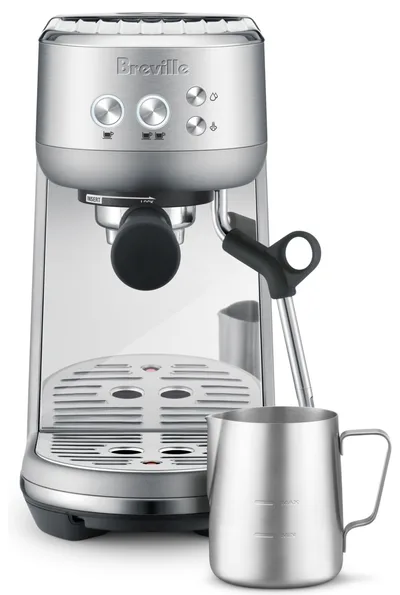
Breville the Bambino
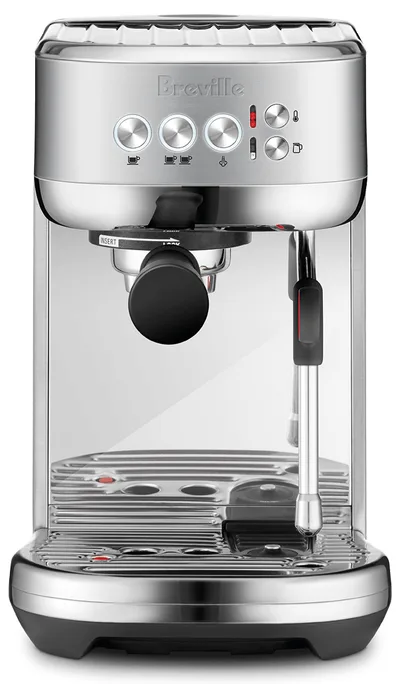
Breville the Bambino Plus
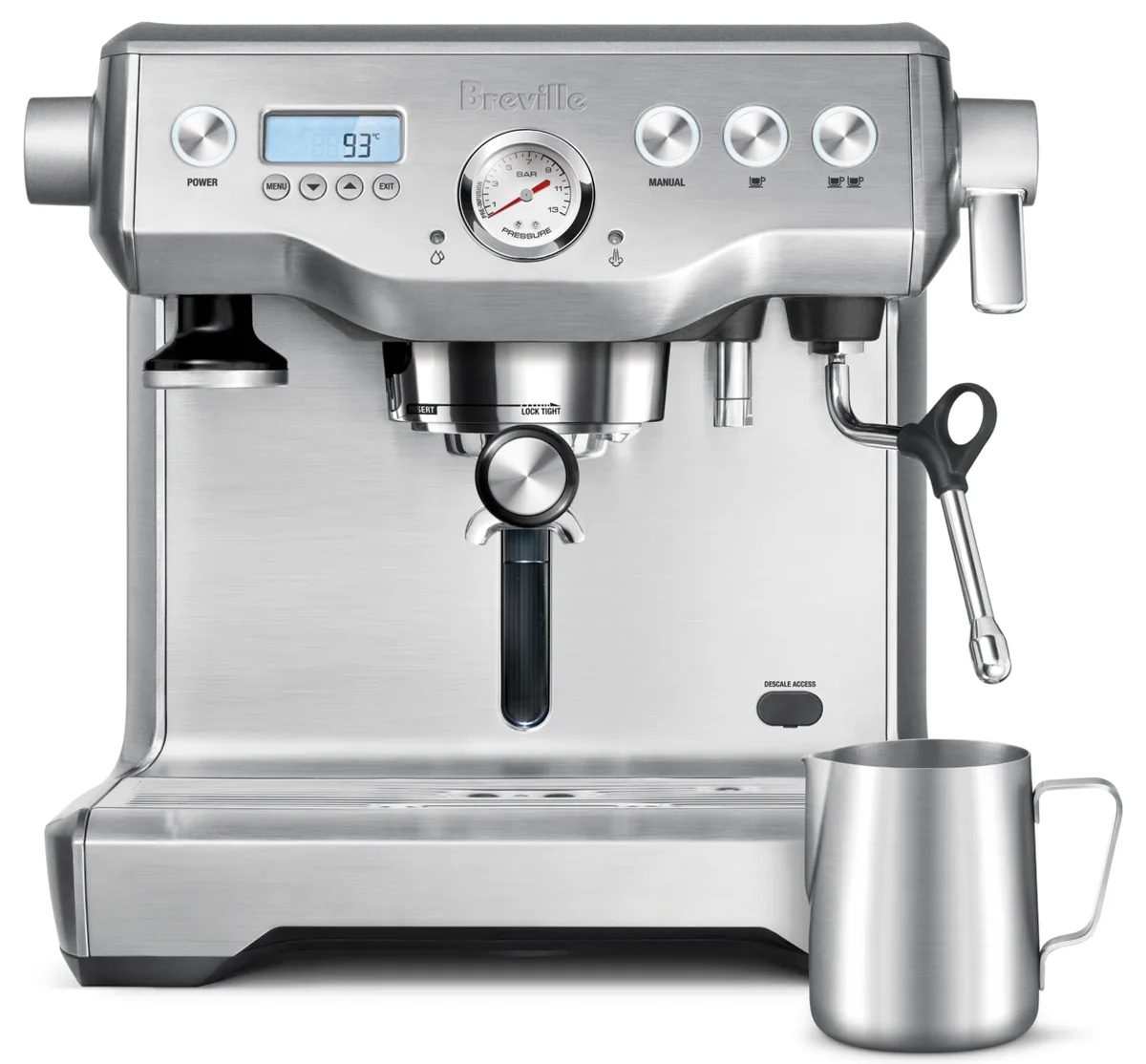
Breville the Dual Boiler
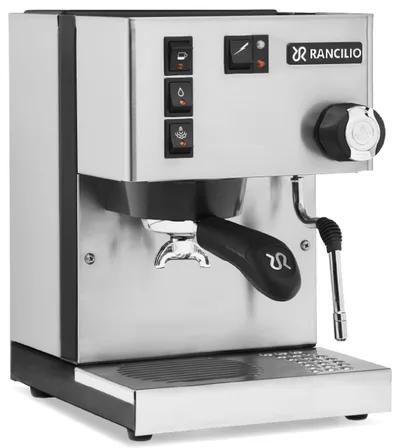
Rancilio Silvia
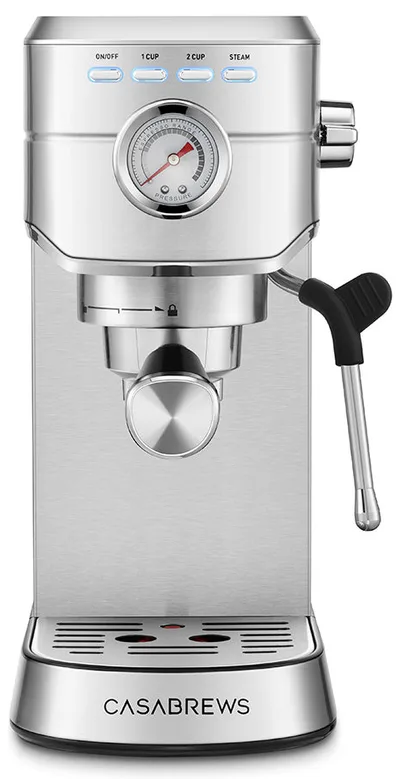
CASABREWS CM5418
Mentioned in: How do you steam milk with a manual steam wand?
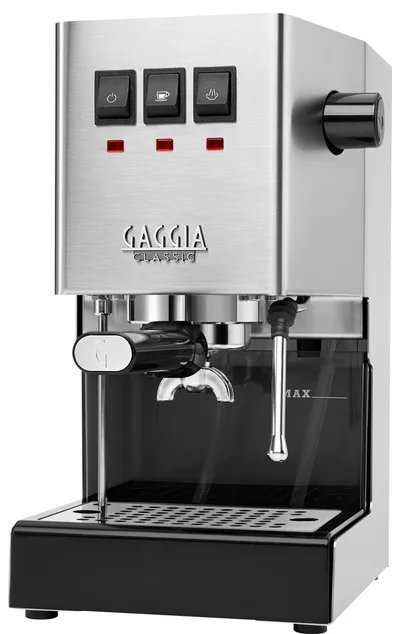
Gaggia Classic Pro E24
Frequently asked questions
Do you heat milk before using a frother?
No. Breville's Milk Café book says to always use cold milk and fill between MIN and MAX, and Nespresso's Aeroccino 4 manual recommends refrigerated milk (4-6 °C for the best froth). Both frothers heat the milk themselves.
Sources
- Barista Express BES870 instruction book (US, X26), p.15 and p.19 — Breville, accessed November 17, 2026
- Bambino BES450 instruction book (US, M26), p.13 — Breville, accessed November 17, 2026
- Bambino Plus BES500 instruction book (US, Y25), p.14-15 — Breville, accessed November 17, 2026
- Barista Express Impress BES876 instruction book (US, F26), p.20-21 — Breville, accessed November 17, 2026
- Barista Pro BES878 instruction book (US, Q26), p.17-18 — Breville, accessed November 17, 2026
- Barista Touch BES880 instruction book (US, AB26), p.16 and p.21 — Breville, accessed November 17, 2026
- Barista Touch Impress BES881 instruction book (US, J26), p.17-18 — Breville, accessed November 17, 2026
- Dual Boiler BES920 instruction book (US, Y23), p.21 — Breville, accessed November 17, 2026
- Oracle Jet BES985 instruction book (US, G26), p.10 — Breville, accessed November 17, 2026
- Infuser BES840 instruction book (US, M23) — Breville, accessed November 17, 2026
- Milk Café BMF600 instruction book (US, K26), p.9-10 and p.15 — Breville, accessed November 17, 2026
- How to steam milk: A step-by-step guide — Breville US, accessed November 17, 2026
- Latte recipe — Breville US, accessed November 17, 2026
- Cappuccino recipe — Breville US, accessed November 17, 2026
- Bambino Plus BES500 product page (jug size) — Breville US, accessed November 17, 2026
- Barista Touch BES880, Barista Pro BES878, Express Impress BES876, Touch Impress BES881, Oracle Jet BES985, Dual Boiler BES920 product pages (jug sizes) — Breville US, accessed November 17, 2026
- Gaggia Classic E24 operating instructions, USA (6420-010-18419), p.19-20 — Gaggia, accessed November 17, 2026
- Silvia / Silvia E Installation and User Manual (2024-03), p.16 — Rancilio Group North America, accessed November 17, 2026
- CM5418 instruction manual (EN/ES), PDF p.19-21 — CASABREWS, accessed November 17, 2026
- Dedica EC685 instructions for use, US (asset 167828), PDF p.6 — De'Longhi, accessed November 17, 2026
- EC235‑260 Espresso Maker instructions for use, US (asset 373359), p.9 — De'Longhi, accessed November 17, 2026
- Magnifica Evo ECAM29084 instructions for use, US (asset 282340), section 12.6-12.7 — De'Longhi, accessed November 17, 2026
- Aeroccino 4 user manual (REFRESH Z3, 2022-03-09, multi-language) — Nespresso, accessed November 17, 2026