Accessories
How to clean a coffee maker, model by model
Cleaning and descaling steps for 30 exact coffee makers, kettles, drippers and scales, each credited to its maker, with the trigger and the vinegar stance of every brewer and kettle.
Assessment based on manufacturer documentation and independent published sources; we have not physically tested these products.
By Syed Hyder Ali · Updated · How we research
In short
Clean and descale by the manual for your exact model: unplug before cleaning, wash only the parts your maker lets you wash, and descale when your maker's signal says so, with the product your maker names. Vinegar is where makers split: of the 20 brewers, kettles and capsule machines read here, makers allow it for 3, advise against it for 10 and do not mention it for 7.
Worked example
- Brewer
- Moccamaster KBGV Select
- Maker's trigger
- every 100 brew cycles, or at least every three months
- Brews per day
- 3 (then 1)
100 cycles ÷ 3 brews a day = 33 days; at 1 brew a day, 100 cycles take about 100 days, so the three-month minimum comes first
about 33 days at 3 brews a day; every three months at 1 brew a day
Arithmetic from hypothetical inputs, not a measured count. One brew is one brew cycle. Your interval varies with your brews per day and your maker's trigger.
Assumptions and exclusions
This assumes
- One brew equals one brew cycle where a maker counts cycles
- Each maker's manual or care page as read on 2026-11-16 to 2026-11-18
- US models and US manuals
This does not cover
- Nespresso descaling steps, owned by the Nespresso descaling guide
- Grinder cleaning, owned by the grinder cleaning guide
- Espresso machines, Keurig machines, prices, taste or performance effects of scale
- Third-party cleaning products beyond the ones a maker names
How do you clean a coffee maker?
Two jobs get separate treatment in the manuals: washing the parts that touch coffee, and descaling the water side. All eight drip-maker manuals read here tell you to unplug the machine before cleaning, to keep the cord and plug out of water (six of the eight also name the machine itself; the OXO 8-Cup and 9-Cup name the cord and plug only), to avoid abrasive cleaners, pads or steel wool (some of the warnings name the carafe only), and to end a descale with a water-only rinse. What they do not share is the interval, the descaling product and the dishwasher rules, which the tables below give model by model.
Wash after use what the maker names, and descale when the maker's signal appears. The table lists what each maker says to do after each brew.
| Exact model | After each brew | Dishwasher | Source |
|---|---|---|---|
Hand-wash the carafe and brew basket with mild dishwashing detergent and rinse thoroughly; wipe the exterior with a moist cloth. | The glass carafe is not dishwasher safe. | ||
Hand-wash the carafe and brew basket with mild dishwashing detergent and rinse thoroughly. For coffee-oil stains in the thermal carafe, soak it overnight with a little dishwasher detergent and water, or use Urnex or Durgol cleaning products to their directions. | The thermal carafe is not dishwasher safe. | ||
Clean the carafe and housing with a soft damp cloth and mild dish liquid. Now and then, use a coffee-machine cleaning product on the filter basket and carafe: it removes coffee oils and is not a descaler. | The filter basket, brewer lid and carafe lid can go on the top rack. | ||
Empty the carafe after each use and rinse it; rinse the basket and mesh filter under running water and keep the mesh holes clear. Do not leave brewed coffee in the carafe overnight: it can stain. | Not listed. | ||
Breville Precision Brewer Thermal | Same routine as the Luxe: empty and rinse the carafe after each use, rinse the basket and mesh filter, and do not leave coffee in the carafe overnight. | Not listed. | |
Lift out the filter basket, discard the grounds and paper and rinse the basket; rinse and dry the carafe; hand-wash the water tank with warm soapy water and a soft-bristled brush. | Only the single-serve and batch-brew filter baskets, on the top rack. No other part. | ||
Hand-wash the carafe and lid with mild detergent after use and rinse thoroughly. For carafe coffee-oil stains, soak overnight with a little dishwasher detergent and water. | The removable parts are top-rack safe; the carafe and lid are not. | ||
OXO Brew 9-Cup | Hand-wash the carafe and lid with mild detergent after use and rinse thoroughly. For carafe coffee-oil stains, soak overnight with a little dishwasher detergent and water. | The removable parts are top-rack safe; the carafe and lid are not. |
Two storage lines are worth knowing. Moccamaster states that before storing the brewer, or leaving it unused for more than a week, you switch it off and unplug it, remove the outlet arm, empty the remaining water by holding the brewer upside down over the sink, and refit the arm before the next use. The Fellow EKG kettles state to clean and dry all parts before storing and never to wrap the cord around the kettle. For drippers, AeroPress and scales, see the sections below.
Can you clean or descale with vinegar?
It depends on the maker, and the makers disagree. Of the 20 brewers, kettles and capsule machines whose manuals are read here, makers allow vinegar for 3 models (COSORI and Fellow, for the kettles), advise against it for 10 (Bonavita, Fellow for the Aiden, Moccamaster and Nespresso) and do not mention it for 7. Fellow appears on both sides because its kettle page allows vinegar and its Aiden manual advises against it. Check your own maker's line before you pour anything in; some makers tie the warranty to descaling as instructed (see the warranty section).
| Maker's stance | Models | What the maker states |
|---|---|---|
Allows it | COSORI Original gooseneck kettle; Fellow Stagg EKG Pro; Fellow Stagg EKG | COSORI lists half a lemon or ½ US cup (118 mL) of distilled vinegar boiled with 2 US cups (473 mL) of water. Fellow states that citric acid is its preferred home option and that vinegar also works. |
Advises against it | Moccamaster KBGV Select and KBT; Bonavita Connoisseur and 1.0 L kettle; Fellow Aiden; five Nespresso machines | Moccamaster, Bonavita and Fellow state that vinegar may not remove the build-up, is hard to rinse out and can leave an odor or affect flavor. Nespresso states that vinegar can damage the machine and names its own descaling kit. |
Does not mention it | Breville Luxe and Precision; OXO 8-Cup, 9-Cup and adjustable kettle; Fellow Stagg stovetop; Hario Buono | These makers name a descaling solution or none at all. Not listed is not a verdict that vinegar is safe or unsafe. |
The one place a maker prescribes vinegar for something other than scale is the AeroPress: its page states that if the chamber ever gets sticky, you wash it with vinegar. The Nespresso machines are counted here for the vinegar line only; their descaling steps are in the Nespresso descaling guide.
How do you descale a drip coffee maker, model by model?
Descale with the product your maker names, on your maker's trigger. The table gives each maker's trigger, what it names and what it says happens if you skip it. The steps follow, one block per model.
| Exact model | When to descale | What the maker names | If you skip it |
|---|---|---|---|
Every 100 brew cycles (one 100-count box of filters), or at least every three months. | Urnex or Durgol descaling products, used to their directions. Advises against vinegar. | The brewer can be permanently damaged, and the 5-year warranty does not cover defects arising from lack of descaling. | |
Every 100 brew cycles (one 100-count box of filters), or at least every three months. | Urnex or Durgol descaling products, used to their directions. Advises against vinegar. | The brewer can be permanently damaged, and the 5-year warranty does not cover defects arising from lack of descaling. | |
Every 60 brew cycles: the brewer beeps 3 times at power-on. Sooner if it runs unusually loud, brews slowly or no longer reaches 198-205°F. | A good-quality biodegradable, phosphate-free coffee machine descaler, prepared as its packet directs. Advises against vinegar. | Build-up and potential permanent damage. | |
When the descale icon flashes on the LCD. | A descale agent prepared to its maker's instructions; the manual names no product. | Not listed. | |
When the LCD flashes DESCALE. | A descale solution prepared to its maker's instructions; the manual names no product. | Not listed. | |
Roughly every three months; the Aiden also shows a descale notice when it is required, and you run the cycle as soon as possible then. | A high-quality biodegradable, phosphate-free liquid coffee machine descaler at its maker's ratio (typically around 1:10). Advises against vinegar. | Not listed. | |
The Clean light comes on after every 90 cycles as a reminder; how often depends on your water hardness. | A descaling solution sold where household cleaning products are sold; the manual names no product. | The coffee maker will not work properly, and the warranty is void if descaling is not done as instructed. | |
A descale icon shows after every 90 cycles as a reminder, and you can descale manually at any time; how often depends on your water hardness. | A descaling solution sold where household cleaning products are sold; the booklet names no product. | The coffee maker will not work properly, and the warranty is void if descaling is not done as instructed. |
Other drip machines are not covered here. If your model is not in the table, read the descaling section of its own manual and use the product it names.
Moccamaster KBGV Select
- Descale with the Urnex or Durgol product, following its maker's directions.
- Afterwards, brew 2 full reservoirs of plain water through the brewer to clear any remaining descaler.
The maker also states:
- Regular descaling is required to keep performance and warranty coverage; if not descaled regularly, the brewer can be permanently damaged.
- The 5-year warranty does not cover defects arising from lack of descaling.
- Pour only water or recommended cleaning products into the water reservoir.
Source: Moccamaster USA: Moccamaster USA instruction manual v23.0, pp. 4, 6, 7
Moccamaster KBT
- Descale with the Urnex or Durgol product, following its maker's directions.
- Afterwards, brew 2 full reservoirs of plain water through the brewer to clear any remaining descaler.
The maker also states:
- Regular descaling is required to keep performance and warranty coverage; if not descaled regularly, the brewer can be permanently damaged.
- The 5-year warranty does not cover defects arising from lack of descaling.
- Pour only water or recommended cleaning products into the water reservoir.
Source: Moccamaster USA: Moccamaster USA instruction manual v23.0, pp. 4, 6, 7
Bonavita Connoisseur 8-Cup
- Prepare the descaler as its packet directs and pour it into the water reservoir.
- Press and hold the power button for 10 seconds; the descale cycle starts.
- Rinse by running a regular brew cycle 2-3 times with fresh cold water.
- When descaling is over, the cycle counter resets from 60 to 0.
The maker also states:
- Neglecting regular descaling can cause build-up and potential permanent damage.
Source: Bonavita: Bonavita Connoisseur BV1901TS manual, p. 14; Bonavita: Bonavita FAQ: 'How often should I descale my Bonavita brewer?'
Breville Luxe Brewer Thermal
The cycle takes about 30 minutes. The water in the carafe may be hot when you empty it.
- Remove the water filter from the tank.
- Empty the tank and pour in the prepared descale solution up to the 1000 mL descale line.
- Place the empty basket and the empty carafe, lid locked, under the drip-stop outlet.
- Press Settings, turn the dial to the descale icon and press it (the LCD shows 30:00), then press the dial once more to start; the cycle takes about 30 minutes.
- When the screen flashes FILL, remove and empty the tank, refill it to MAX with fresh water and let the rinse cycle run.
- When the main menu returns, discard the water from the carafe and rinse it, then empty and rinse the tank.
The maker also states:
- The water in the carafe may be hot when you empty it.
Source: Breville: Breville the Luxe Brewer BDC415/BDC465 instruction book, pp. 19, 20
Breville Precision Brewer Thermal
Discontinued; Breville still supports it. The cycle cannot be stopped once started; the only way to force-stop it is to unplug the machine.
- Empty the tank and pour in the prepared descale solution.
- Place the basket and the empty carafe, lid locked, under the drip-stop outlet.
- Hold SELECT for 3 seconds to start; the LCD shows dSL, then the time remaining (the cycle takes about 15 minutes).
- When the main menu returns, the manual says to 'invert the machine and brew with fresh water twice' to clear residual water from the tank, then discard the water from the carafe and rinse it.
- The manual also recommends brewing through again after descaling to flush out the descale solution residue.
The maker also states:
- The cycle cannot be stopped once started; the only way to force-stop it is to unplug the machine.
Source: Breville: Breville Precision Brewer BDC450/BDC455 instruction book, p. 19
Fellow Aiden
The whole process takes about 30 minutes.
- Empty the water tank, add the liquid descaler at its maker's ratio and fill with water to the MAX line (1.5 L).
- Put the empty batch-brew filter basket and the empty carafe in place, with the shower head in batch-brew mode.
- Choose Settings > Maintenance > Descale and follow the on-screen instructions; the whole process takes about 30 minutes.
- When it ends, empty the carafe and rinse it thoroughly.
- Run 3 regular brew cycles with no coffee to clear the remaining solution.
Source: Fellow: Fellow Aiden Precision Coffee Maker safety information manual, p. 7
OXO Brew 8-Cup (SKU 8718800)
Take any filter or the Single‑Serve Accessory out of the brew basket first; the cycle takes around 25 minutes.
- Add descaling solution and filtered water to the tank up to, not past, the MAX line.
- Put the empty carafe in place with its lid fully screwed on, remove any filter or the Single‑Serve Accessory from the brew basket and seat the basket securely.
- Slide the switch to Carafe mode, press Power, then Clean. The cycle takes around 25 minutes and ends with a chime as the Clean light goes off; let it finish.
- Rinse: fill the tank to MAX with water, run a 5-8 cup water-only brew and discard that water.
The maker also states:
- The coffee maker will not work properly if it is not descaled regularly, and the warranty is void if descaling is not done as instructed.
- Put only water, descaling products or coffee grounds into the coffee maker.
Source: OXO: OXO Brew 8-Cup Coffee Maker manual, pp. 3, 11
OXO Brew 9-Cup
- Add descaling solution and water to the tank up to, not past, the MAX line, and put the empty carafe in place with its lid fully screwed on.
- With the descale icon lit, turn the dial right until the descale icon appears and the LED ring turns red. To descale manually instead, unplug the coffee maker, then hold the OXO button while plugging it back in.
- Press the OXO button to start.
- Afterwards, fill the tank to MAX, run a 5-9 cup brew cycle with water only and discard the water.
The maker also states:
- The coffee maker will not work properly if it is not descaled regularly, and the warranty is void if descaling is not done as instructed.
Source: OXO: OXO 9-Cup Coffee Maker booklet, p. 7
If a drip basket overflows
Two makers state limits that bear on overflow. Fellow states that the maximum coffee dose for the Aiden's batch basket is 82.5 g (110 g for cold brew) and that above it there is a risk of overflow. Bonavita states to remove the carafe's lid before brewing and to put it back on shortly after brewing, for heat retention. Neither maker diagnoses an overflow beyond that; if your basket is not covered, read your maker's manual, and for the paper that sits in the basket see coffee filter sizes. Sources: Fellow, Aiden get-to-know-you guide; Bonavita, Connoisseur manual.
How often should you descale?
Makers count it three ways: by brew cycles, by a built-in signal, or by calendar. Bonavita counts 60 brew cycles; OXO shows a reminder after 90; Moccamaster says every 100 cycles or at least every three months; Fellow says roughly every three months and shows a notice; Breville gives no number and flashes an icon. The worked example shows what the counts mean at one brew a day and at three.
| Exact model | Maker's trigger | At 1 brew a day | At 3 brews a day |
|---|---|---|---|
Bonavita Connoisseur | Every 60 brew cycles | 60 days | 20 days |
OXO Brew 8-Cup and 9-Cup | Reminder after every 90 cycles | 90 days | 30 days |
Moccamaster KBGV Select and KBT | Every 100 cycles or at least every three months | Three months (100 cycles take longer) | About 33 days |
Fellow Aiden | Roughly every three months, or when the notice shows | Three months | Not listed: the notice follows the water used |
Hard water shortens every interval; OXO states that how often depends on how hard your water is. For the kettles, the makers use uses, visible scale or the kettle's behavior, covered in the next section. Pick the model that fits your routine in the drip coffee maker guide.
How do you descale a gooseneck or electric kettle?
All five electric kettles here give a descale method; the two stovetop kettles give none. Fellow and COSORI allow vinegar or a food acid; Bonavita names its own descaler; OXO names a descaling solution. Kettles to compare are in the gooseneck kettle guide. The original Stagg EKG is no longer sold new by Fellow US; Fellow's page now shows the Stagg EKG Pro.
| Exact model | When to descale | What the maker names and does | Source |
|---|---|---|---|
OXO Brew Adjustable Temperature Pour‑Over Kettle | Every 60 uses; the ideal interval depends on water hardness. | OXO recommends its own descaling solution; the manual says to buy one where household cleaning products are sold. Steps: 3.5 oz of solution with 28 oz of water, bring to a boil, switch off and unplug, let sit 15-30 minutes, rinse 2-3 times with fresh water. | |
Bonavita 1.0 L Variable Temperature Gooseneck Kettle | When mineral build-up is visible inside the kettle. | Bonavita Descaler: 1 bottle or 1 packet in 32 oz of lukewarm water, bring to a boil, let the kettle cool 15 minutes, discard and rinse thoroughly. States that vinegar may not descale the kettle effectively, is hard to rinse out and can leave an odor. | |
COSORI Original Electric Gooseneck Kettle | At least once a week if you use the kettle frequently, and always before and after storing it for long periods. | Half a lemon squeezed in, or ½ US cup (118 mL) of distilled vinegar, with 2 US cups (473 mL) of water, boiled; scrub thick scale with a non-scratch sponge, pour out and wipe; repeat as needed. A quick method for a thin layer: 3 US tbsp (44 mL) of baking soda and ½ US cup (118 mL) of vinegar, swirled and wiped. | |
Fellow Stagg EKG Pro | No fixed interval: descale when the kettle can no longer reach boiling temperature. | A scale or lime remover to its maker's directions; or citric acid (Fellow's preferred home option: 500 mL of water with 2 spoonfuls, boiled, left at least 30 minutes, emptied and rinsed); or half vinegar and half water on the same routine; or Urnex Dezcal as its bottle directs. | |
Fellow Stagg EKG (original, no longer sold new by Fellow US) | No fixed interval: it is time when the kettle heats but will not boil. | The same three options as the EKG Pro. |
Do not scrub the inside bottom of a Fellow kettle with steel wool or an abrasive brush; Fellow states that it makes limescale worse and can lead to rust. COSORI states not to use steel wool and not to remove the filter from the lid, which breaks it. Fellow's warranty excludes damage from not following the cleaning and descaling instructions. The wooden handle and lid pull on a Fellow kettle take oil: the EKG Pro care page states food-safe mineral oil once a month, and the original EKG manual states every six months (see Where sources disagree).
Stovetop kettles
The Fellow Stagg stovetop kettle and the Hario V60 Buono give a wash routine and no descaling method. Both makers state that white spots are harmless magnesium and calcium residue from tap water, and that washing and drying the kettle thoroughly after each use avoids them. Fellow: hand-wash with dish-washing detergent after each use, no dishwasher, no bleach or other chemicals, no coarse sponge, and if corrosion appears rub it with a little compounding polish on a soft sponge and rinse. Hario: wash with a sponge or scrubbing brush after each use, no chlorine bleach, and leaving water in the kettle for long periods causes rust and can open a hole. Sources: Fellow: Fellow Stagg Pour‑Over Kettle, p. 1; Hario: Hario V60 Drip Kettle Buono instruction manual, pp. 7, 10.
How do you clean a pour-over dripper, a Chemex or an AeroPress?
These have no descaling cycle; the manuals give a wash. Glass breaks, so the makers' cautions cover handling as well as cleaners. The pour-over models are in the pour-over guide, with the paper each one takes in coffee filter sizes.
| Exact model | What the maker says | Source |
|---|---|---|
Hario V60 02 (plastic) and V60 01 (plastic) | Hario's global product page marks both dishwasher safe. The Hario USA page and the manual do not say. | |
Hario V60 02 (ceramic) | Hario's global product page marks it dishwasher safe. | |
Hario V60 02 (glass) | Wash with a soft sponge and neutral detergent; dishwasher safe (read your dishwasher's manual). For a particularly dirty glass, diluted household bleach following the bleach's precautions, then rinse thoroughly. No abrasive cleansers or sponges. Do not wring it with a twisting motion, which can break it. Let it cool before discarding grounds: the resin holder softens when hot and the glass comes off easily. | |
Hario Switch 02 | Wash before first use with a soft sponge and neutral detergent; all parts come apart; dishwasher safe (read your dishwasher's manual). The same bleach and abrasive cautions as the V60 glass. Do not lose the stainless steel ball when washing: without it, hot water flows out of the bottom. | |
Kalita Wave 185 (glass) | Kalita USA lists it as dishwasher safe. | |
Warm soapy water, or the dishwasher once the wood collar and leather tie are off; Chemex suggests its coffeemaker cleaning brush. In the dishwasher, secure the carafe so it does not bump other dishes: it can break. | ||
Rinse after each brew: push the plunger through over a sink or bin to pop out the coffee puck, discard the paper filter and rinse the filter cap and chamber. Weekly, wash with lukewarm water, gentle soap and a gentle cloth. Dishwasher: top rack only. Now and then remove the plunger seal and wash it with warm water and dish soap. If the chamber gets sticky, wash it with vinegar. Store with the seal pushed all the way through the chamber. |
How do you clean a coffee scale?
Wipe it and keep water out of the body: every maker here warns against soaking, submerging or running water over the scale. The water-resistance statements and where they conflict are in the coffee scale guide; this table gives the cleaning each maker states.
| Exact model | Clean with | Do not | Source |
|---|---|---|---|
Acaia Pearl | Acaia's product page: a soft cloth with warm water only. Acaia's help center: a towel dampened with water (microfiber or lint-free); for tough residue, water mixed with a cleaning liquid intended for items with a screen or display; warm soapy water for the heat-resistant pad. Two Acaia sources differ; see Where sources disagree. | Under running water or submerged; spray cleaner on the scale; aerosols, bleach, 100% alcohol cleaners or abrasives; drying it on a hot object such as an espresso machine or dishwasher. | |
Greater Goods Premium Coffee Scale | A soft, slightly damp cloth; a mild dishwashing soap for stains or residue. The silicone cover comes off and is dishwasher safe. | Immerse it or put it in the dishwasher: water gets into the battery box and breaks the scale; immersion voids the warranty. No chemicals or harsh abrasives. | |
Hario V60 Drip Scale | A slightly damp cloth on the main body; a mild detergent for hard-to-clean areas. | Thinners, benzene, gasoline, kerosene or alcohol. Hario USA states the scale is not water resistant, and the manual says not to use it after immersion. | |
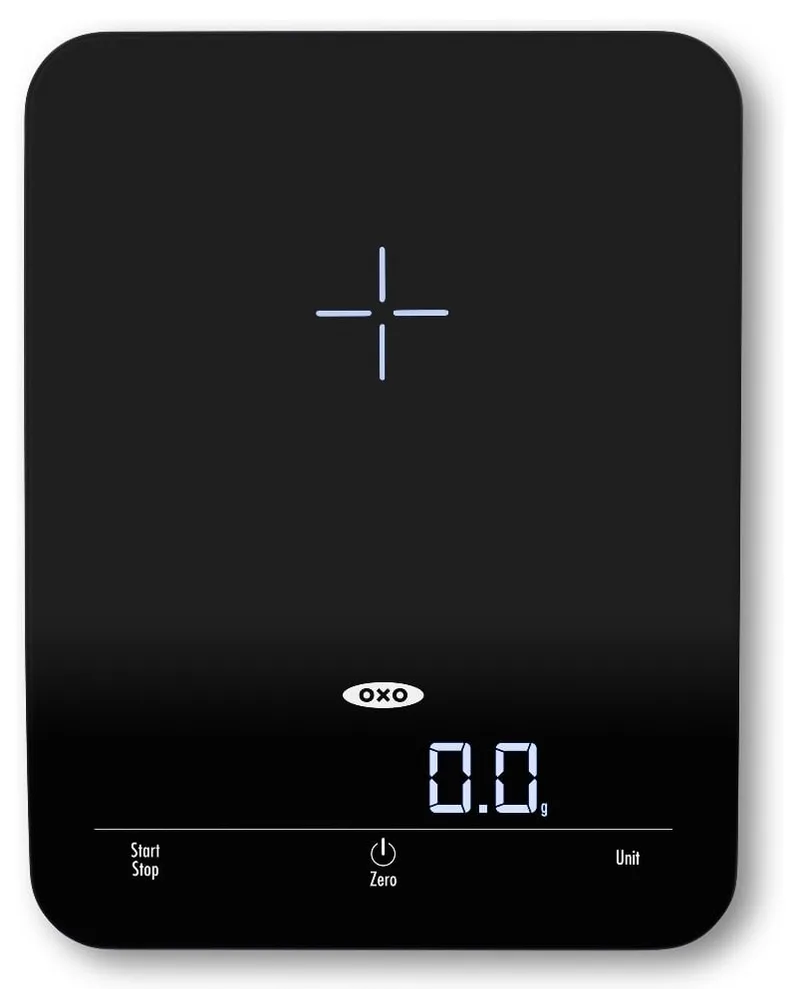
OXO 6 lb Precision Scale with Timer | A damp cloth on the platform. The silicone mat is dishwasher safe. | Run the scale under water or put it in the dishwasher. | |
Timemore Black Mirror Basic 2 | The manual lists no cleaning agent. It states the surface is waterproof. | Let liquid into the gap between the shells and the charging port, or soak it. |
The OXO scale's booklet is read from a copy hosted by Williams‑Sonoma; no copy is on oxo.com.
Does skipping cleaning or descaling affect the warranty?
For several makers it does, in the manual's own words. Moccamaster states that the 5-year warranty does not apply to a defect arising from lack of descaling or failure to follow its instructions. OXO states that the warranty is voided if descaling is not carried out in accordance with its instructions. Fellow states that the warranty on its kettles excludes damage from not following the cleaning instructions and descaling agents. Greater Goods states that water immersion is not covered and voids the warranty. Bonavita states that neglecting regular descaling can cause build-up and potential permanent damage. Where a maker lists no such clause (Breville, and Fellow for the Aiden), that is Not listed, not an assurance.
Whether a model is worth keeping or replacing is a buying question: see the drip coffee maker guide, or the gooseneck kettle guide for a kettle. Sources: Moccamaster USA: Moccamaster USA instruction manual v23.0, pp. 4, 6; Bonavita: Bonavita FAQ: 'How often should I descale my Bonavita brewer?'; OXO: OXO Brew 8-Cup Coffee Maker manual, p. 11; Fellow: Fellow Stagg EKG Pro / Pro Studio Edition safety and maintenance manual, p. 8; Greater Goods: Premium Coffee Scale, model 0460: product guide.
What about grinders, Nespresso and espresso machines?
They have their own guides, because their steps are model-specific and long. Grinders: how to clean a coffee grinder. Nespresso: how to descale a Nespresso machine. Other espresso machines: cleaning and descaling. Keurig: how to descale a Keurig. The five Nespresso machines read here name the Nespresso descaling kit and advise against vinegar.
Where sources disagree
Acaia Pearl cleaning agents. Acaia's product page states to use a soft cloth with warm water only and no detergent or other chemicals, which can damage the anodized coating. Acaia's help center states a towel dampened with water, and for tough residue water mixed with a cleaning liquid intended for items with a screen or display. This page lists both and does not choose between them. See the product page and the help center.
Fellow Stagg EKG wood care. The original EKG manual states to condition the wooden handle and lid pull with oil every six months or when the finish feels rough; Fellow's kettle care page states food-safe mineral oil once a month and whenever the wood feels especially dry. Both are printed here. See the care page.
Which guide comes next?
- Choosing between machines that need the same descaling routine: drip coffee makers, gooseneck kettles, Nespresso machines.
- Grinders to compare: grinders for pour-over.
- How we read manuals and what research-based means: how we research. Retailer links on this site: affiliate disclosure.
Models this page mentions
We may earn a commission when you buy through links on this page.
In the order the page mentions them; not a ranking.
Mentioned in: How do you clean a coffee maker?
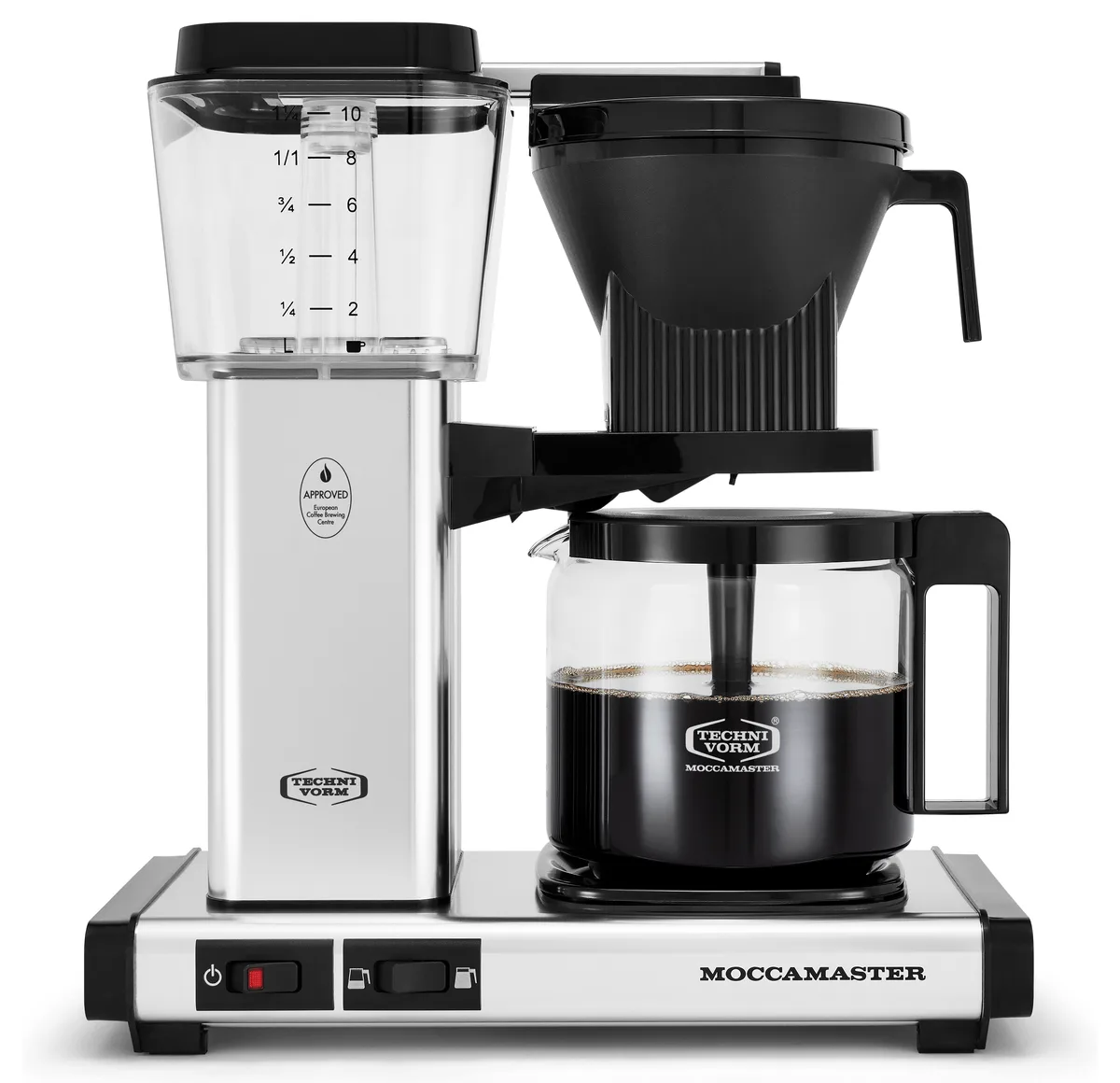
Technivorm Moccamaster KBGV Select
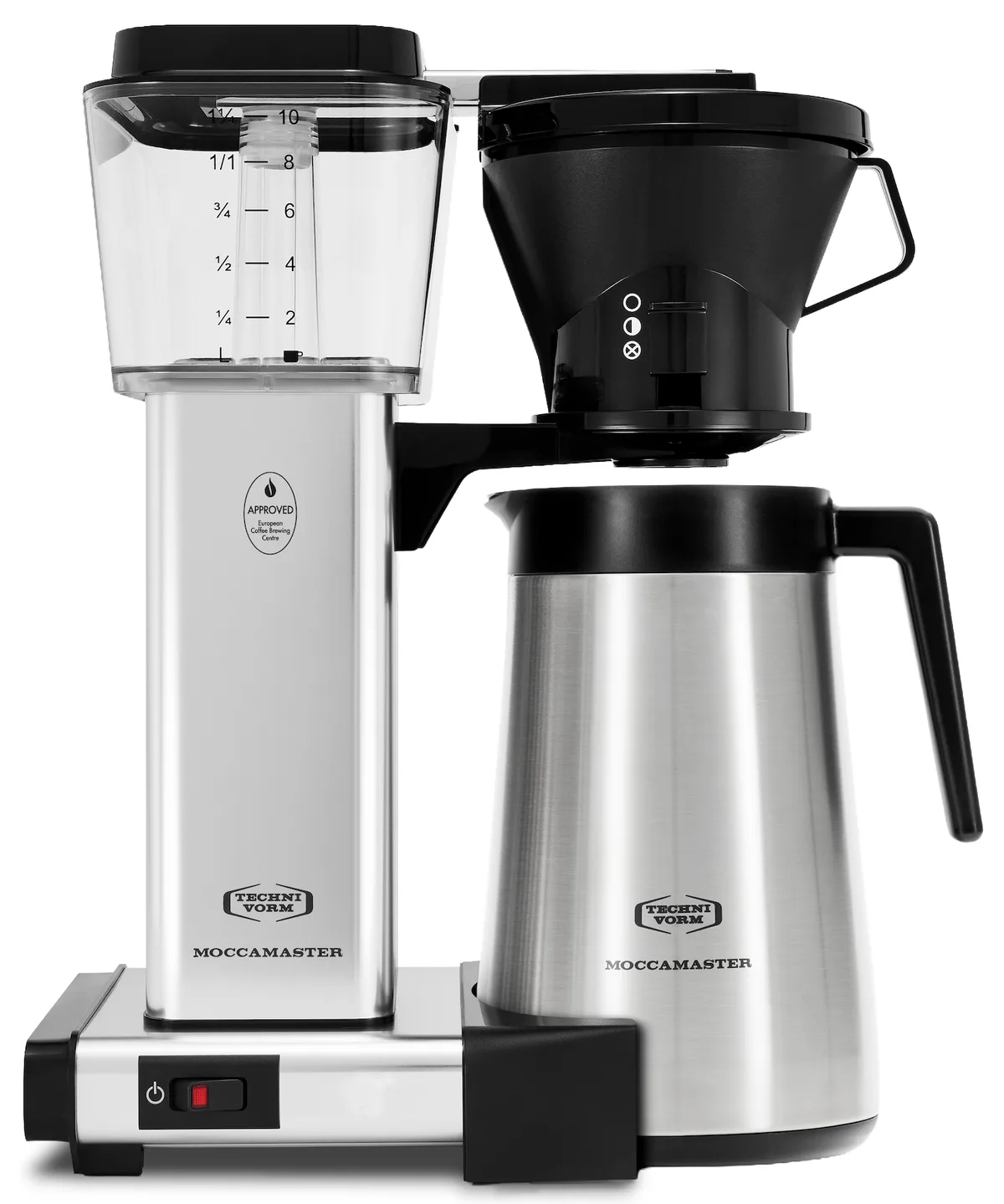
Technivorm Moccamaster KBT
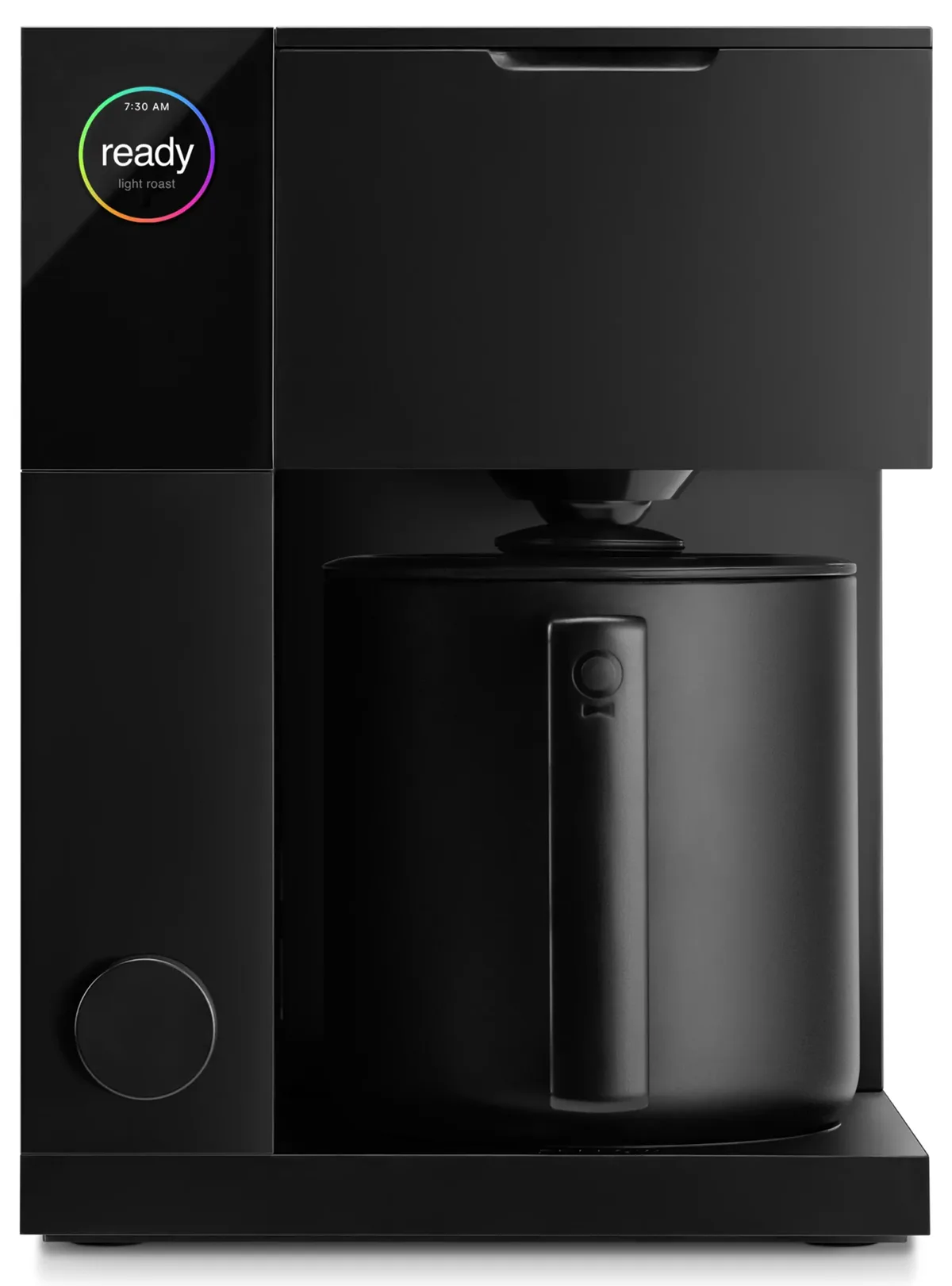
Fellow Aiden Precision Coffee Maker
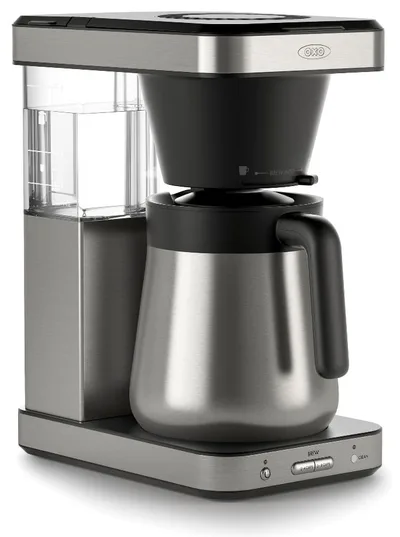
OXO Brew 8-Cup Coffee Maker
Mentioned in: Can you clean or descale with vinegar?
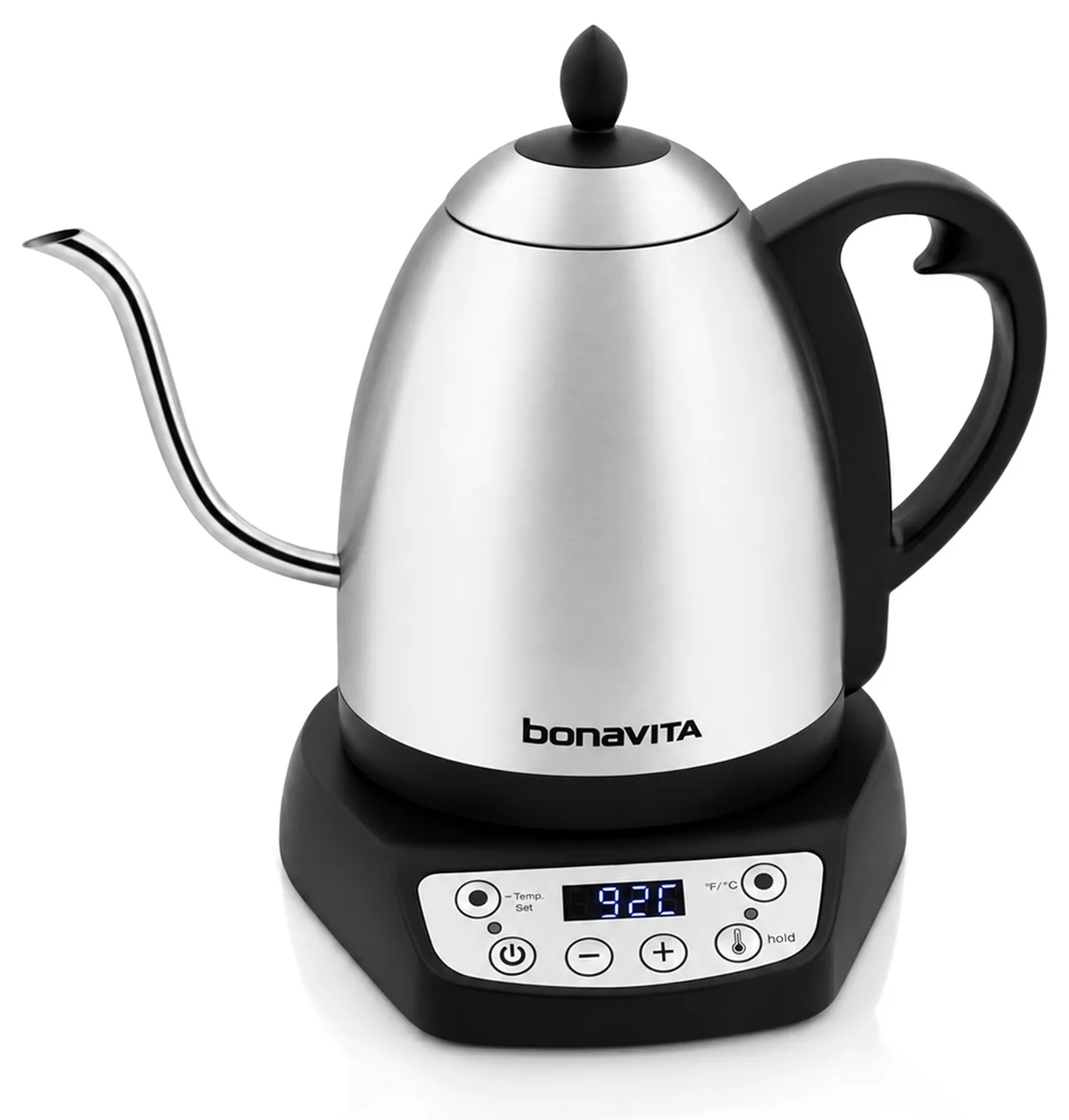
Bonavita 1.0 L Variable Temperature Gooseneck Kettle
Mentioned in: How do you descale a gooseneck or electric kettle?
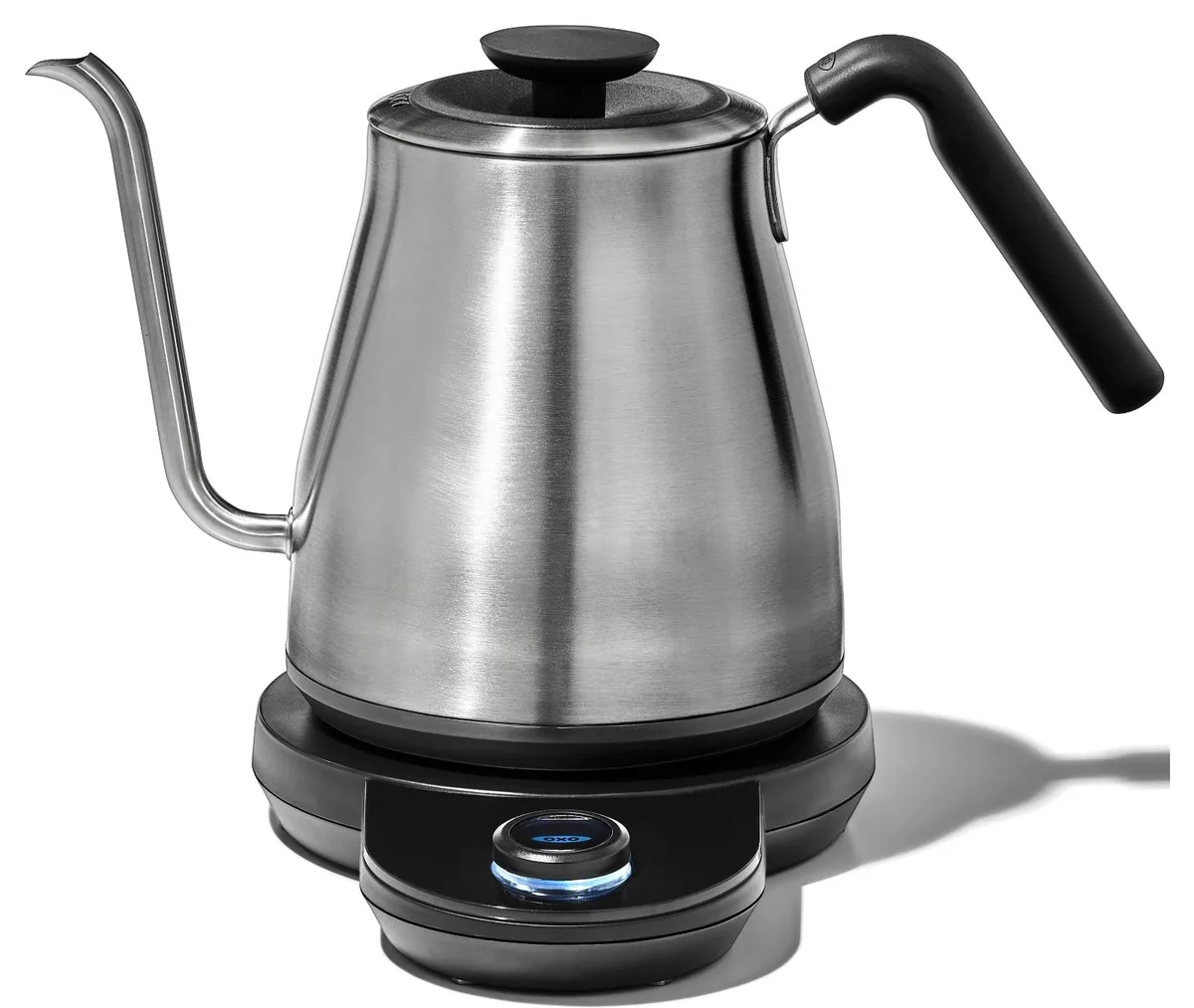
OXO Brew Adjustable Temperature Pour‑Over Kettle
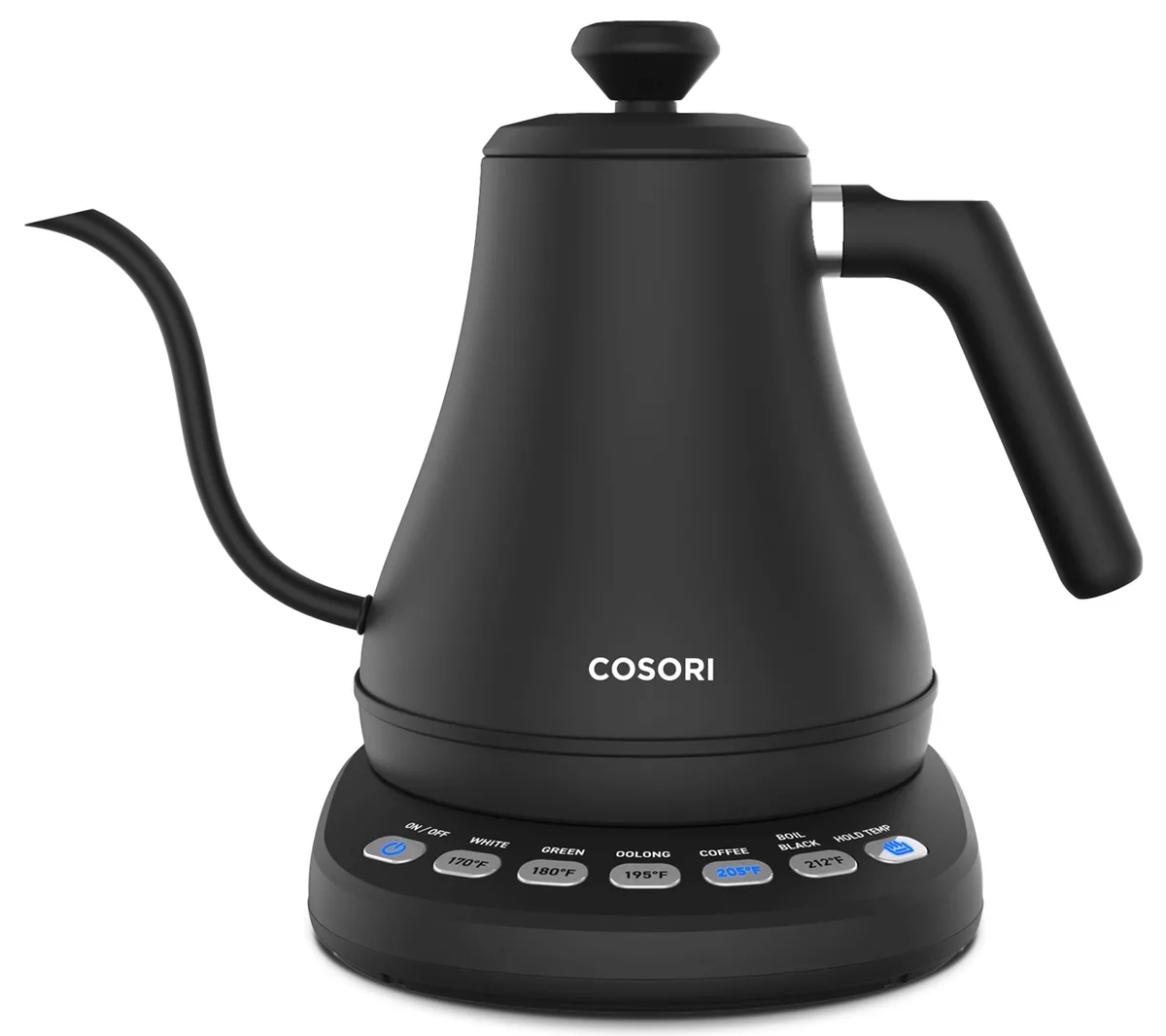
COSORI Original Electric Gooseneck Kettle
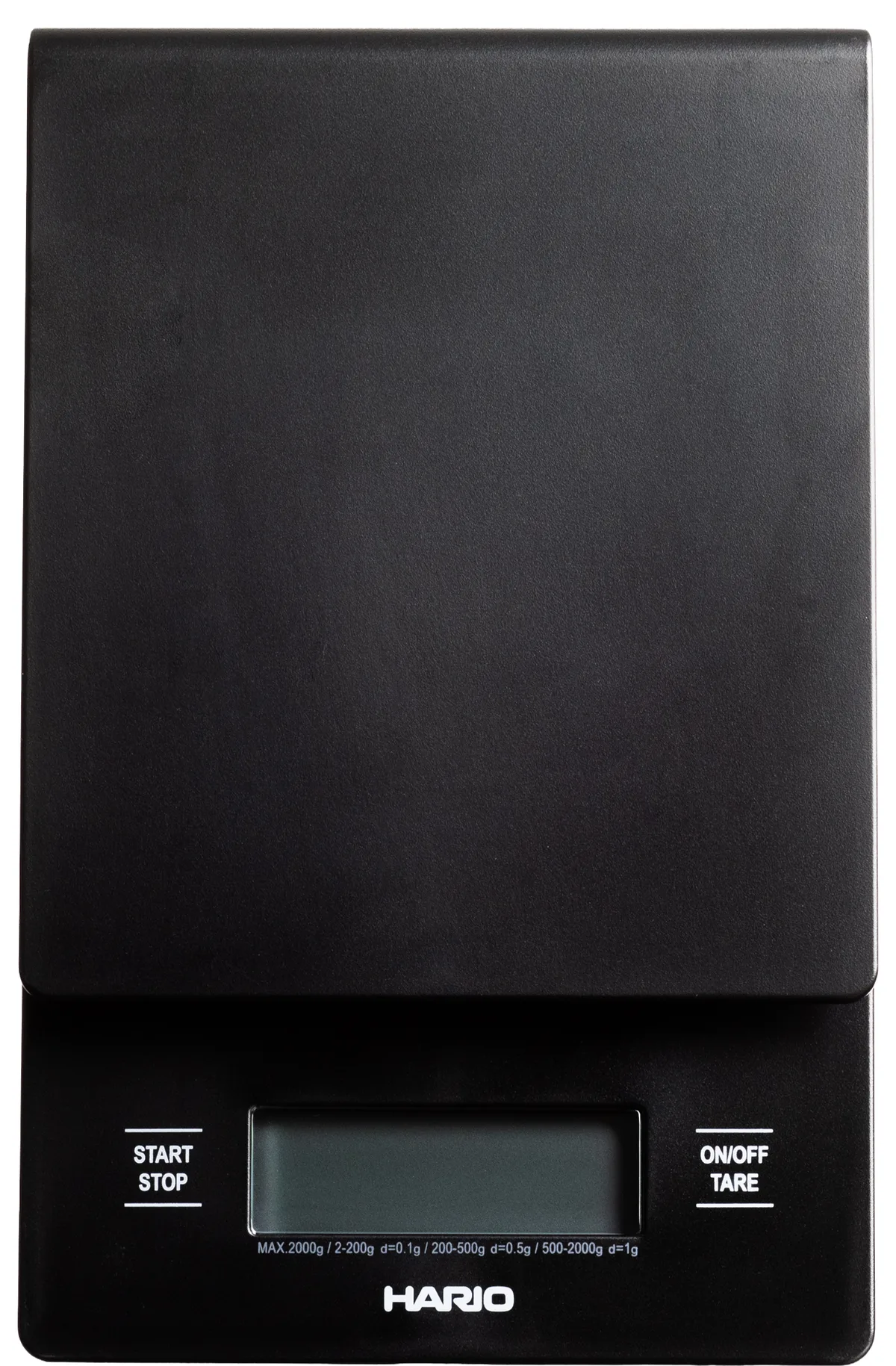
Hario V60 Drip Scale (Black, VSTN‑2000B)
Mentioned in: How do you clean a pour-over dripper, a Chemex or an AeroPress?
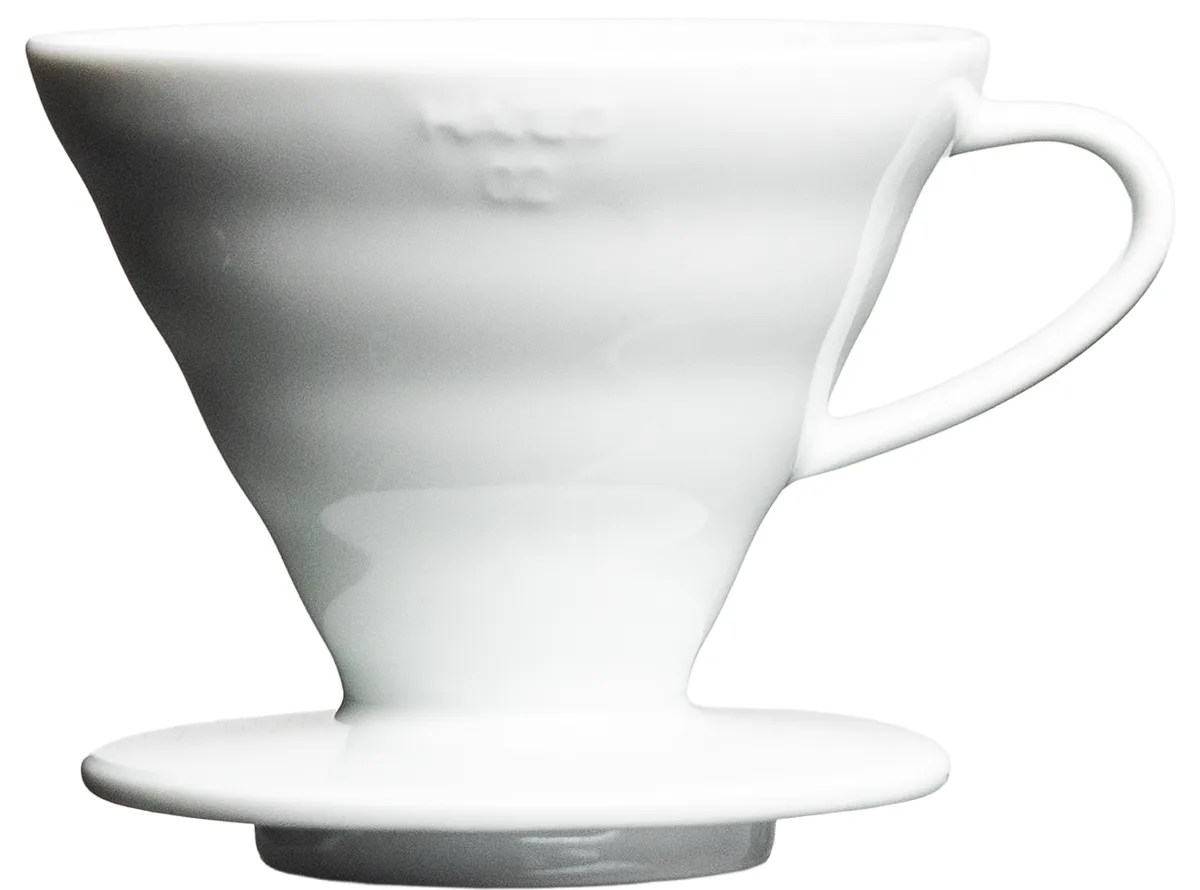
Hario V60 Ceramic Dripper 02 (White)
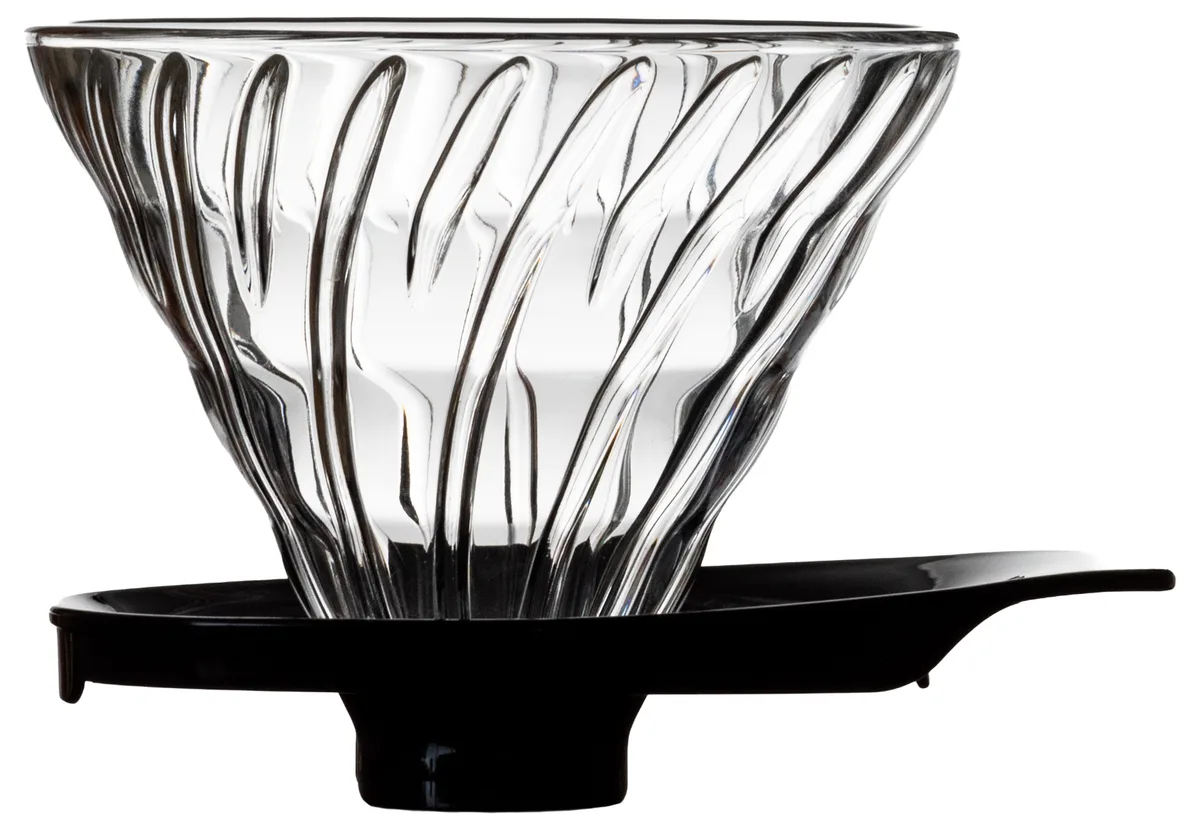
Hario V60 Glass Dripper 02 (Oval Base, Black)
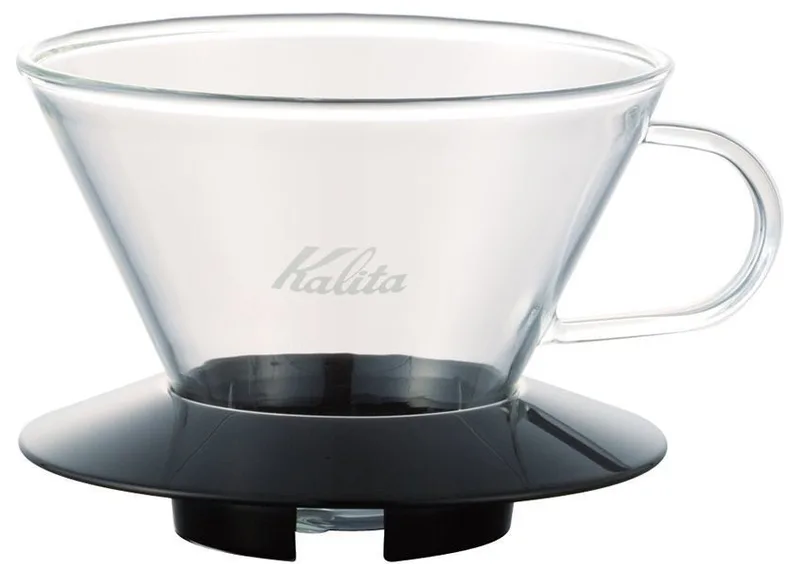
Kalita Wave 185 Glass Dripper
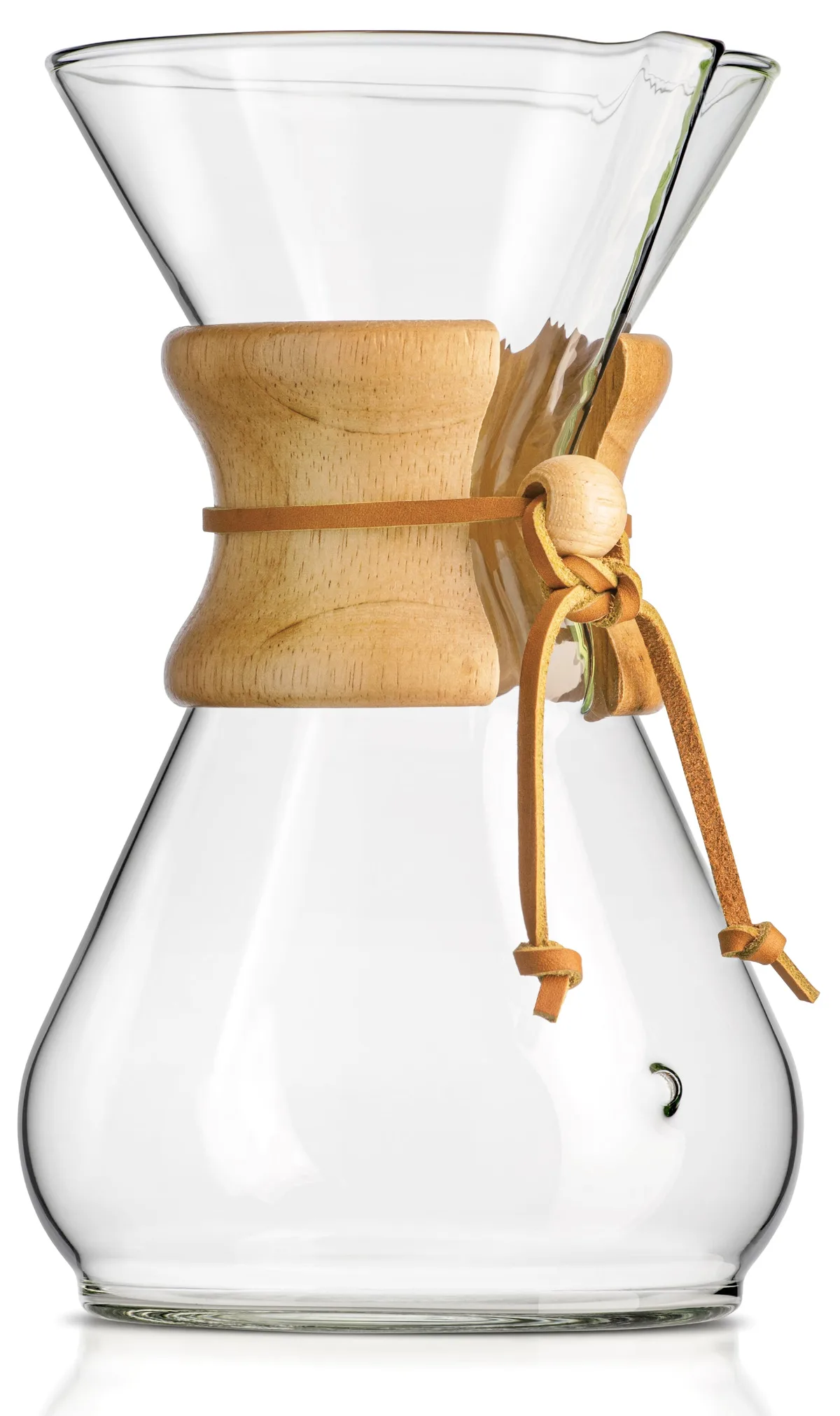
CHEMEX Eight Cup Classic
Mentioned in: How do you clean a coffee scale?
- Greater Goods Premium Coffee ScaleView on Amazon, Greater Goods Premium Coffee Scale (opens in a new tab)
OXO 6 lb Precision Scale with Timer
Sources
- How to Clean Your Acaia Products — Acaia, accessed November 16, 2026
- Pearl - acaia US — Acaia, accessed November 16, 2026
- AeroPress Clear / Original instructions — AeroPress, accessed November 16, 2026
- AeroPress Coffee Maker - Original, US product page FAQ — AeroPress, accessed November 16, 2026
- Bonavita 1.0 L Digital Variable Temperature Gooseneck Kettle manual — Bonavita, accessed November 16, 2026
- Bonavita Connoisseur BV1901TS manual — Bonavita, accessed November 16, 2026
- Bonavita FAQ: 'How often should I descale my Bonavita brewer?' — Bonavita, accessed November 16, 2026
- Breville Precision Brewer BDC450/BDC455 instruction book — Breville, accessed November 16, 2026
- Breville the Luxe Brewer BDC415/BDC465 instruction book — Breville, accessed November 16, 2026
- COSORI Original Electric Gooseneck Kettle CO108‑NK user manual — COSORI, accessed November 16, 2026
- CHEMEX Classic Series product support: Cleaning & Maintenance tab — Chemex, accessed November 16, 2026
- Fellow Aiden Precision Coffee Maker safety information manual — Fellow, accessed November 16, 2026
- Fellow Stagg EKG Pro / Pro Studio Edition safety and maintenance manual — Fellow, accessed November 16, 2026
- Fellow Stagg EKG safety and instruction guide — Fellow, accessed November 16, 2026
- Fellow Stagg Pour‑Over Kettle — Fellow, accessed November 16, 2026
- Stagg EKG Pro and Pro Studio Edition Gear Guide — Fellow, accessed November 16, 2026
- Premium Coffee Scale, model 0460: product guide — Greater Goods, accessed November 16, 2026
- Hario Immersion Dripper SWITCH instruction manual — Hario, accessed November 16, 2026
- Hario V60 Drip Kettle Buono instruction manual — Hario, accessed November 16, 2026
- Hario V60 Glass Dripper instruction manual — Hario, accessed November 16, 2026
- V60 Ceramic Dripper product page, Hario global — Hario, accessed November 16, 2026
- V60 Drip Scale Black — Hario, accessed November 16, 2026
- V60 Drip Scale instruction manual VSTN‑2000 — Hario, accessed November 16, 2026
- V60 Dripper — Hario, accessed November 16, 2026
- Kalita Wave 185 Glass Dripper: Details & Care — Kalita USA, accessed November 16, 2026
- Moccamaster USA instruction manual v23.0 — Moccamaster USA, accessed November 16, 2026
- OXO 9-Cup Coffee Maker booklet — OXO, accessed November 16, 2026
- OXO Adjustable Temperature Pour‑Over Kettle manual — OXO, accessed November 16, 2026
- OXO Brew 8-Cup Coffee Maker manual — OXO, accessed November 16, 2026
- OXO Precision Scale booklet gg_11212400_booklet_0717 — OXO, accessed November 16, 2026
- TIMEMORE BLACK MIRROR Basic 2 Coffee Weighing Platform user manual — Timemore, accessed November 16, 2026
- Aiden: get-to-know-you guide (US) — Fellow, accessed November 18, 2026