Espresso machines
How to clean an espresso machine
Find your machine: the cleaning job it signals, the maker's cycle, and what the maker says never to do.
Assessment based on manufacturer documentation and independent published sources; we have not physically tested these products.
By Syed Hyder Ali · Updated · How we research
In short
How to clean an espresso machine: follow your maker's own routine, not a universal one. Breville says to rinse the baskets and portafilter right after use and wipe the steam wand after milk; Gaggia says to wash the filters daily; Rancilio says to clean the group head daily with a blind disk and detergent. Run the cleaning cycle when your machine asks, and keep it separate from descaling. The table below finds your model.
Assumptions and exclusions
This assumes
- A US model; your own manual wins if it differs
- Everyday home use, not a cafe
- Maker manuals as published on 2026-11-17
This does not cover
- Descaling, intervals and vinegar
- Stand-alone grinders and capsule machines
- Cleaner brands the maker does not name
How to clean an espresso machine: which jobs does your maker name?
Machines clean in three ways: a cycle the machine runs (Breville, the JURA E8, the Rancilio Silvia Pro X), a routine you do by hand (the Gaggia Classic Pro and Anima, the Rancilio Silvia, the De'Longhi Dedica and Stilosa, the CASABREWS CM5418), or little beyond washing and rinsing parts (the De'Longhi Magnifica Evo and the Flair and Cafelat lever machines). If yours runs a cycle, have the maker's tablet or detergent in the house before the alert comes. Find your model below. "Not listed" means the maker's document says nothing either way, so follow the manual that came with the machine.
| Machine and where | The signal or timing | Jobs the maker names | What the maker says not to do |
|---|---|---|---|
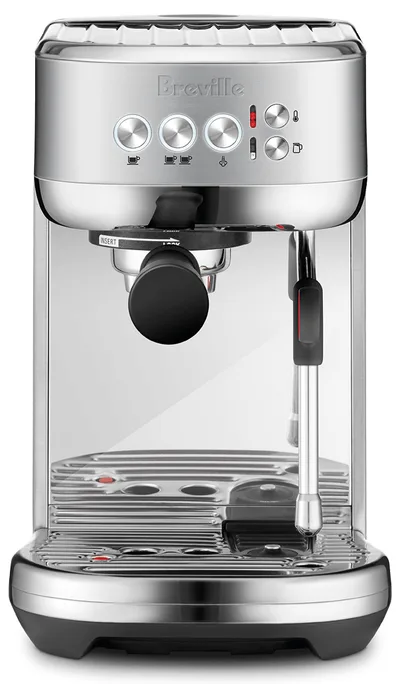
Breville Bambino Plus (BES500), PDF p.17-19 | 1 CUP and 2 CUP flash alternately after 200 extractions | Cleaning cycle with the supplied disc and one tablet; rinse baskets and portafilter right after use; wipe the wand after milk; wipe the group head and shower screen | No dishwasher for any part; no abrasive cleansers or pads; do not immerse the machine |
Breville Bambino (BES450), PDF p.15-17 | The 2 Cup button flashes; one alert means cleaning and descaling | Flush the group head with the 2 Cup button; rinse baskets and portafilter; wipe the wand and the shower screen; the cycle is the descale cycle (descaling steps) | Portafilter and all accessories out of the dishwasher; no abrasive cleaners |
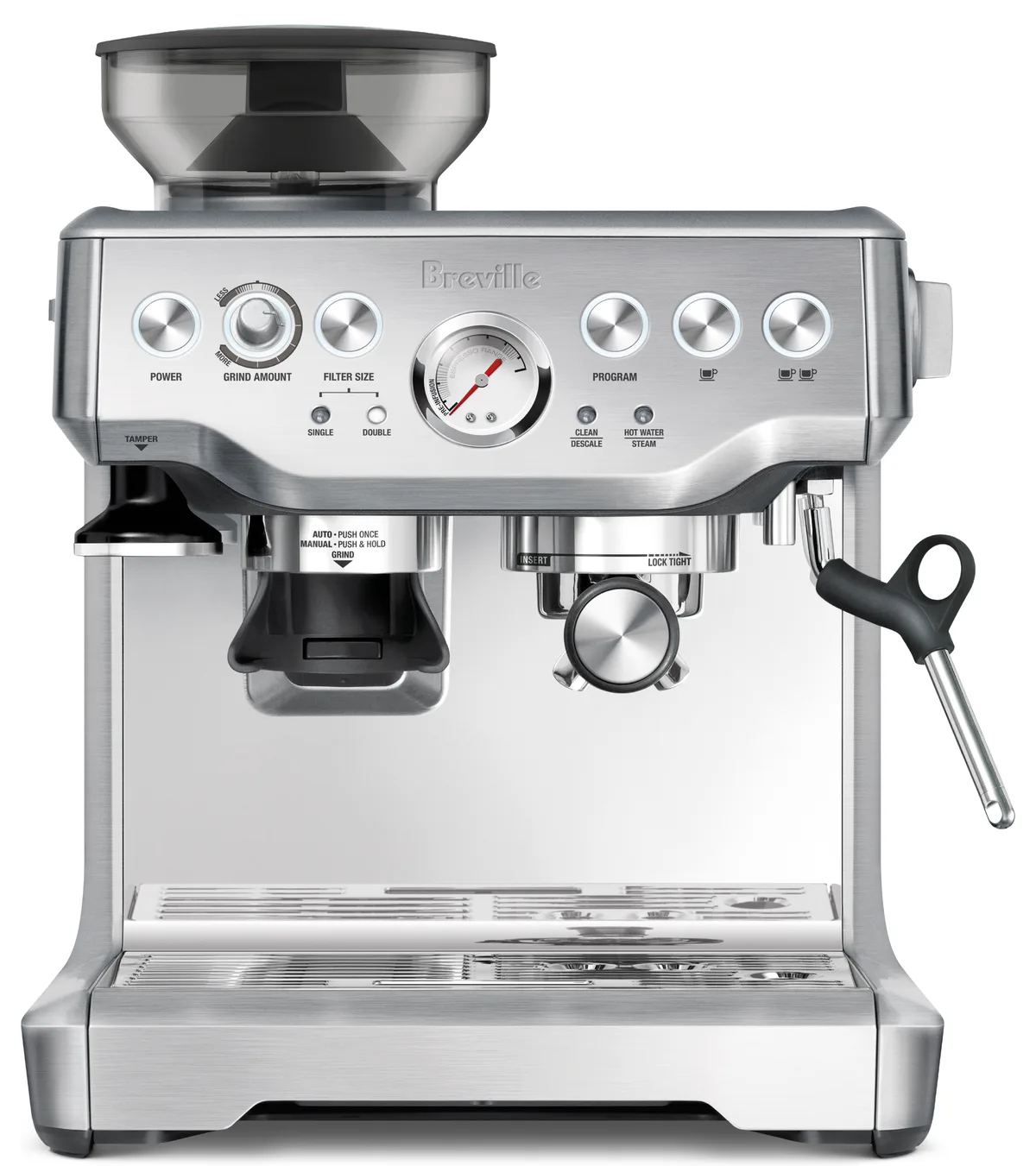
Breville Barista Express (BES870), PDF p.22-25 | CLEAN / DESCALE light flashing | Cleaning cycle (1 CUP basket, disc, tablet; hold 1 CUP, 2 CUP and POWER about 10 seconds; about 5 minutes; two beeps); wipe the wand and shower screen; soak a blocked basket in dissolved tablet about 20 minutes; clean the burrs | No dishwasher; no abrasive cleansers; care with the burrs, which are extremely sharp |
Breville Infuser (BES840; discontinued), PDF p.19-22 | DESCALE/CLEAN light flashing | Same cycle as the Express (three beeps at the end); wipe the shower screen; replace its silicone seal over time | No dishwasher; no abrasive cleansers |
Breville Barista Express Impress (BES876), PDF p.24-28 | CLEAN / DESCALE light flashing | Cleaning cycle (hold 1 CUP, 2 CUP and POWER 3 seconds; about 5 minutes); clean the burrs; wipe the shower screen; replace its seal over time | Burrs extremely sharp |
Breville Barista Pro (BES878), PDF p.20-22 | The LCD shows a FLUSH alert | Disc and tablet, then MENU, FLUSH, 1 CUP; clean the burrs; wipe the group head and shower screen after use | No dishwasher; no abrasive cleansers |
Breville Barista Touch (BES880) and Touch Impress (BES881), PDF p.23-26 | A message prompts a cleaning cycle | Follow the on-screen cycle; clean the burrs; wipe the shower screen; replace its seal over time | Keep the touch screen dry; burrs extremely sharp |
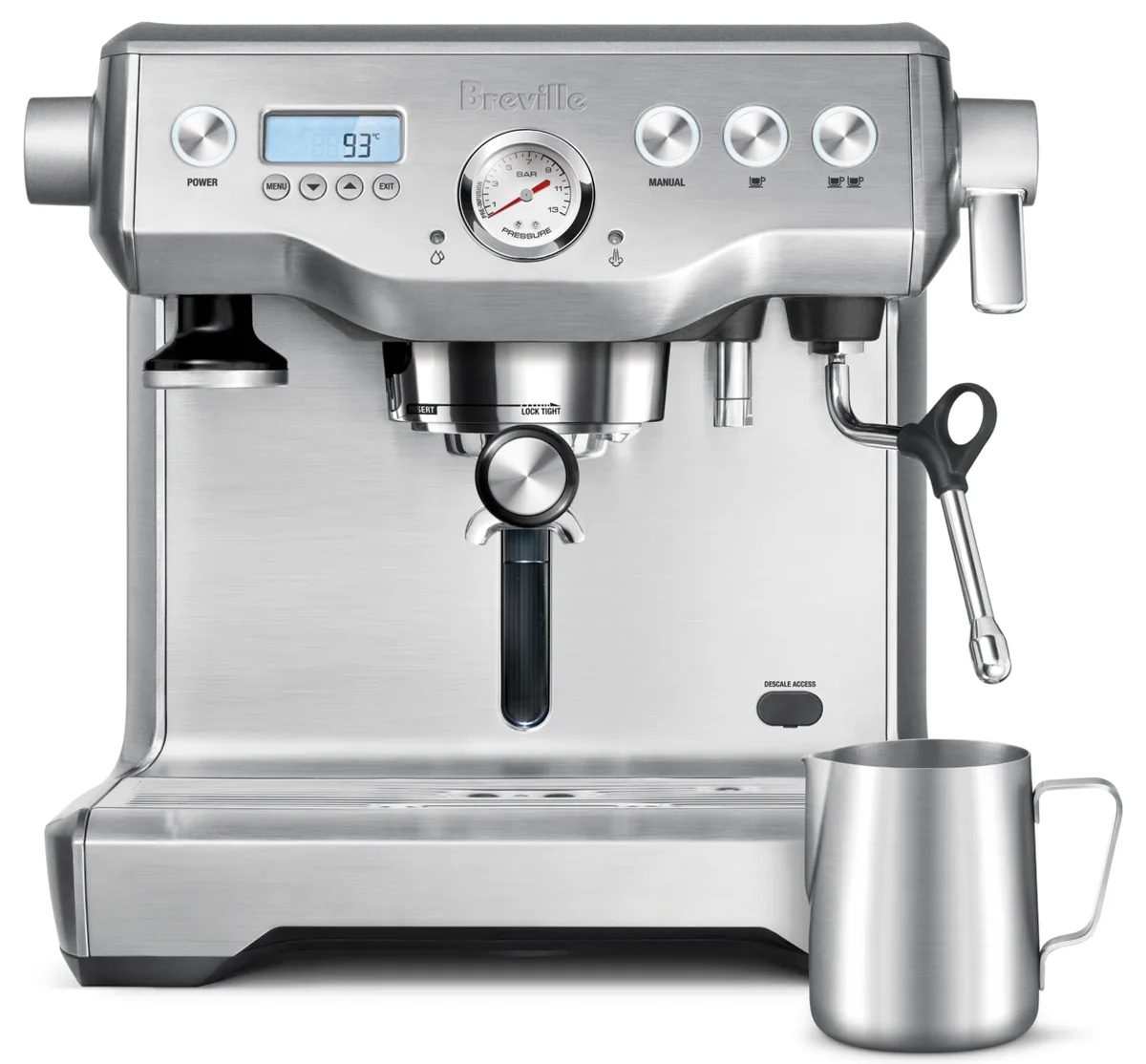
Breville Dual Boiler (BES920), PDF p.23-24 | The LCD shows CLEAN ME! (about every 200 shots) | Cleaning cycle (370 seconds); a clear-water backflush after each session; wipe the wand with the steam lever purge; wipe the shower screen | No dishwasher |
Breville Oracle Jet (BES985), PDF p.26-27 | A message prompts the cycle, or Settings, then Clean Cycle | Cycle cleans the shower screen and back-flushes the group head; a clear-water backflush after each session; Settings, then Steam wand cleaning | No dishwasher; no abrasive cleansers |
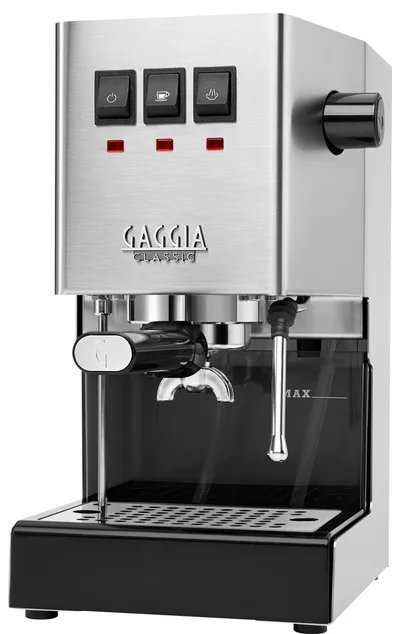
Gaggia Classic Pro (E24); the earlier Evo Pro manual has the same text, PDF p.13, 21 | Wand after each frothing; filters every day; no cleaning cycle listed | Wipe the wand and open the knob a second or two; wash the filters in warm water, or soak in boiling water 10 minutes if brewing misbehaves; brush grounds off the screen and rinse with hot water; wash the tray and tank | Pressurized filter holder: not in the dishwasher, no washing-up liquid or cleaning agent; no abrasive tools |
Gaggia Anima, PDF p.17-20 | Weekly brew group clean; monthly degreasing and lubricating; milk frother after every use | Rinse the brew group in lukewarm water; degreasing tablets after 500 coffees or monthly (sold separately); frother cycle with water | No detergents or soap on the brew group; only the drip tray grill and named frother parts go in the dishwasher |
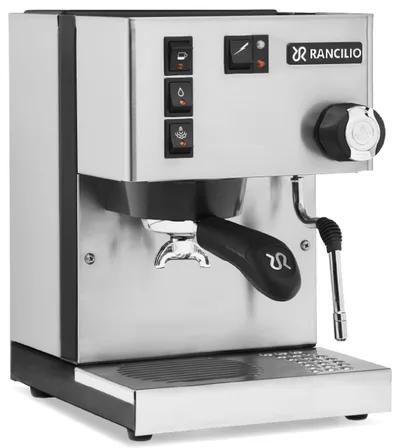
Rancilio Silvia, PDF p.18, 20 | Daily group head and steam wand | Brew 3-4 seconds without the portafilter; blind disk with coffee-machine detergent; coffee switch 5 seconds on, 10 seconds off until the water runs clear; brush the seal under the group head; wand in milk cleaning solution | "Do not brush the shower!"; no abrasive instruments |
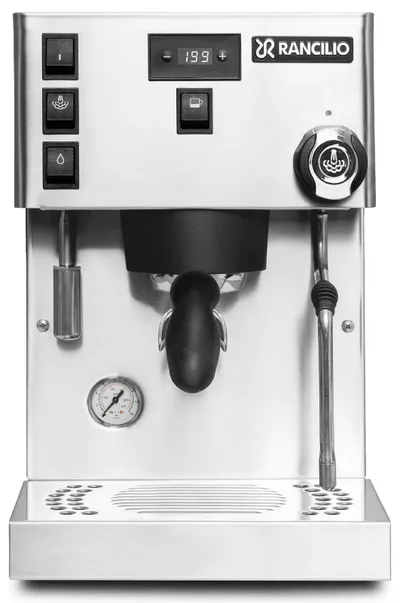
Rancilio Silvia Pro X, PDF p.24, 28 | Daily group head and steam wand | Wash cycle F.01 in three stages (CL1 to CL3) with the blind disk and detergent; brush the portafilter gasket with the supplied brush; wand in milk cleaning solution | No abrasive instruments; no water jets on the steam wand |
De'Longhi Dedica (EC685), PDF p.6-7 | Tray before the red indicator rises; boiler outlet every 200 coffees; tank about monthly | About 0.5 L (≈ 17 fl oz) through the boiler outlet with no coffee; rinse the filters, clear holes with a pin; clean the cappuccino maker after each use; tank with a damp cloth and mild washing-up liquid | No solvents, abrasive detergents or alcohol; no metal objects on deposits; never immerse; dishwasher: Not listed |
De'Longhi Stilosa (EC260), PDF p.9-11 | Filters after each use; thoroughly every 200 cups | Take the filter apart, rinse, brush and clear holes with a pin; clean the cappuccino maker after use | No solvents, abrasive detergents or alcohol; never immerse |
De'Longhi Magnifica Evo (ECAM29084), PDF p.18-21 | The grounds container indicator; drip tray before the red indicator; infuser periodically | Empty and wash the container and tray; infuser soaked about 5 minutes in water, brushed, rinsed; milk carafe in the dishwasher (recommended) or by hand | "No chemical products are required"; infuser: water only, no detergents, no dishwasher; no solvents or alcohol |
CASABREWS CM5418, PDF p.22-24 | Wand purged after each steaming | Brush grounds off the brew head and purge it with hot water; clear a clogged nozzle with the needle or soak it in warm water with espresso machine cleaner; soak the basket 10 minutes in boiling water if brewing misbehaves | No alcohol or solvents; do not take the brew head apart; portafilter, baskets and accessories not dishwasher safe |
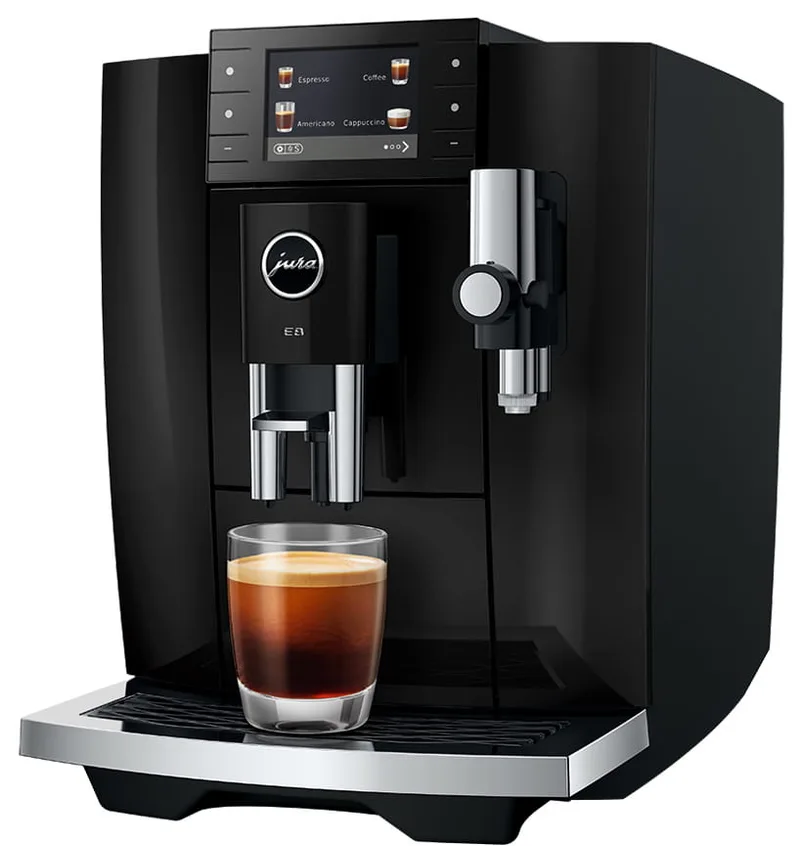
JURA E8, PDF p.20-26 | The machine prompts a cleaning program after 180 preparations or 80 switch-on rinses | Original JURA tablet in the funnel (about 20 minutes); milk system daily with JURA milk system cleaner; frother dismantled weekly; milk pipe and spout changed about every 3 months; tank brushed if necessary | Only original JURA tablets and milk cleaner; do not interrupt the program; dishwasher: see where sources disagree |
Philips 2200 and 3200 series | Not listed: the documents on Philips' US support page give no cleaning schedule | Remove and clean the brew group regularly; classic frother after use; LatteGo milk system parts | Brew group: not in the dishwasher, no washing-up liquid or cleaning agent (Important Information Manual p.4-5) |
Flair 58 Plus 2, PDF p.4 | Not listed | Wipe the brew head and plunger with a damp cloth; flush with cool water for a more thorough clean; no soap needed | Never immerse the brew head |
Cafelat Robot, PDF p.3, 19 | "From time to time" | Wipe the stainless parts with a cloth; now and then soak the basket, screen and spouts in a commercial coffee machine detergent and rinse well | No part or accessory in the dishwasher |
Ninja Luxe Café Premier | Not listed: no Ninja manual was available | Not listed | Not listed |
Not on the list? Read your machine's own cleaning page; capsule, drip and kettle care are in cleaning coffee equipment, and descaling a Nespresso has its own page.
Is it cleaning or descaling?
Cleaning removes coffee oil and residue from the coffee path; descaling removes mineral scale from the water path. Breville's Bambino Plus book puts it plainly: the cleaning cycle "is a flushing cycle and is separate from descaling". Most Breville machines use the same light for both and tell them apart by how it flashes, so read the pattern before you start:
- Bambino Plus: the 1 CUP and 2 CUP buttons flashing alternately mean a cleaning cycle (after 200 extractions); the 1 CUP and STEAM buttons flashing alternately with the 2 CUP button for 15 seconds mean descale.
- Bambino: one signal, the 2 Cup button flashing, covers both, and its cycle shown in the book is the descale cycle.
- Express, Infuser and Express Impress: the light flashing means a cleaning cycle; the light solid means descale.
- Barista Pro, Dual Boiler and the Touch family: a FLUSH alert, a CLEAN ME! message or a screen prompt means cleaning; a separate descale alert means descale.
If your signal means scale, go to how to descale an espresso machine.
How do you run your maker's cleaning cycle?
Breville's Bambino Plus cycle as the instruction book gives it (PDF p.17), one worked set; the other makers' cycles follow it.
- Put the supplied cleaning disc in the filter basket and a cleaning tablet on top of it.
- Lock the portafilter into the group head.
- Empty the drip tray and fit it back; put a 68 fl oz (2 L) container under the portafilter and the steam wand.
- Fill the water tank to the MAX line and fit it.
- Hold the 1 CUP and 2 CUP buttons for 5 seconds to enter cleaning mode.
- Press 1 CUP or 2 CUP to start; the lights flash alternately while it runs.
- When it finishes the machine returns to ready mode.
- Remove and rinse the portafilter, the disc, the drip tray and the container.
With the machine off (all lights off), holding 2 CUP and STEAM for five seconds starts the cycle before the alert appears.
- Barista Express: 1 CUP basket, disc and tablet; with the tank full and the tray empty, switch the machine off, then hold 1 CUP, 2 CUP and POWER about 10 seconds; the cycle runs about 5 minutes and ends with two beeps; check the tablet has dissolved and repeat if not (PDF p.22).
- Dual Boiler: the same disc and tablet; MENU until CLEAN CYCLE flashes, then MANUAL; a 370-second countdown (PDF p.23).
- JURA E8: start from the Cockpit when "Cleaning" shows, put an original JURA tablet in the ground-coffee funnel when asked; about 20 minutes, and do not interrupt it (PDF p.25-26).
- Silvia Pro X: menu, F.01; at CL2 take out the portafilter and blind disk and rinse both; at CL3 refit the disk (PDF p.24).
Does your maker document a backflush?
| Maker | What the manual states |
|---|---|
Breville | The cleaning cycle on the Express, Infuser, Express Impress, Dual Boiler, Oracle Jet and Barista Touch is described as back-flushing the group head; the Touch Impress calls it a flushing cycle. On the Dual Boiler and Oracle Jet, Breville adds a clear-water backflush after each coffee session: disc in the basket, 20 seconds of pressure, release (Dual Boiler: repeat 5 times) |
Rancilio | Blind disk and coffee-machine detergent by hand on the Silvia; the same step as a menu program (F.01) on the Pro X |
Gaggia, De'Longhi, CASABREWS, Flair, Cafelat | Not listed: no manual describes a backflush or blind-disk routine |
The consequence: a generic "backflush daily" routine is Rancilio's and Breville's instruction for those machines, not a rule your Gaggia, De'Longhi or CASABREWS manual gives. Do what your own book names.
Shower screen, group head and portafilter: where makers differ
The makers disagree here, and getting it wrong on a Rancilio matters.
- Wipe it: the ten Breville manuals for these machines all say to wipe the group head interior and shower screen with a damp cloth and to run water through an empty basket and portafilter now and then. Five of them show how to replace the silicone seal around the screen over time with the supplied Allen key (Infuser, Express, Express Impress, Touch, Touch Impress).
- Brush it: Gaggia says to remove residual grounds from the screen with a brush and wash with hot water; CASABREWS says to brush grounds off the brew head, then purge it with hot water, and not to take the head apart.
- Do not brush it: the Rancilio Silvia manual says "Do not brush the shower!" in its daily routine and to brush only the seal under the group head. The Silvia Pro X manual does not repeat that line; its step brushes the portafilter gasket with the supplied brush.
- No instruction: the De'Longhi Dedica and Stilosa manuals name no shower-screen step; they name the boiler outlet and the filters instead.
How do you clean the steam wand?
- Breville: wipe it with a damp cloth right after texturing milk and purge it; a blocked hole is cleared with the cleaning tool: on the Bambino Plus you unscrew the tip with it (PDF p.18), and the Barista Express book adds soaking the unscrewed tip in hot water (PDF p.25). On the Oracle Jet use Settings, then Steam wand cleaning, and tighten the tip afterwards.
- Gaggia: wipe with a damp cloth after each frothing; the nozzle unscrews for washing; open the steam knob a second or two (Classic Pro PDF p.21).
- CASABREWS: wipe it, clear a clog with the cleaning needle or soak the unscrewed nozzle in warm water with espresso machine cleaner, then purge with hot water for 4-6 seconds (PDF p.23).
- Rancilio: submerge the wand in milk cleaning solution as its package directs, rinse, heat it in fresh water and wipe it; no water jets (Silvia PDF p.20; Pro X PDF p.28).
- De'Longhi: after each milk drink, discharge a little steam, let the cappuccino maker cool, unscrew it and wash it in warm water, then clear its holes with a pin (Dedica PDF p.6; Stilosa PDF p.9).
Technique, temperatures and the stop point are in how to steam milk.
What goes in the drip tray, tank and dishwasher?
- Breville: empty and wash the drip tray when its indicator rises, in warm soapy water; the Express family names gentle dishwashing liquid for parts; no part or accessory goes in the dishwasher.
- Gaggia: wash the tray and grill with water; take out the tank with the machine off and refit it with the silicone tubes inside it, not twisted; never the pressurized filter holder in the dishwasher.
- De'Longhi: the Dedica and Stilosa manuals name no dishwasher-safe part; the Magnifica Evo's manual recommends the dishwasher for the milk carafe and says no dishwasher for the infuser.
- CASABREWS: wash the drip tray, grid, spoon-tamper and tank in clean water with a gentle dishwashing solution; not the accessories, portafilter or baskets in the dishwasher.
Where sources disagree: the JURA E8 and the dishwasher
JURA's E8 manual conflicts with itself. Its maintenance table (PDF p.20) says the drip tray insert, drip tray and coffee grounds container are dishwasher-safe, and p.17 says the same of the syrup attachment, but its safety pages (p.5 and p.9) say "Do not put the E8 or any individual parts in the dishwasher". This page does not choose; ask JURA which parts are meant before you put anything in the dishwasher.
What about a built-in grinder or milk system?
On a Barista Express, Pro, Touch, Express Impress or Touch Impress the burrs are cleaned with a grinder cycle of their own: empty the hopper, run the grinder empty, release the lock and remove the top burr, brush the burrs and the chute; Breville warns that the burrs are extremely sharp. A stand-alone grinder is different: see how to clean a coffee grinder.
Bean-to-cup milk systems are cleaned daily or after every use: JURA daily with its own milk system cleaner only, because other agents can leave the frother blocked; the Gaggia Anima rinses the frother after every use and cleans it monthly with its milk circuit cleaner; the De'Longhi Magnifica Evo's carafe goes in the dishwasher (top basket) or is soaked at least 30 minutes by hand; Philips says all LatteGo parts are dishwasher-safe but the brew group is not.
What do the manuals say never to do?
- Do not immerse the machine, cord or plug: Breville, Gaggia, Rancilio, De'Longhi, Philips, JURA and CASABREWS.
- No abrasive pads or cleaners: Breville, Gaggia, Rancilio and De'Longhi.
- No solvents or alcohol: De'Longhi, CASABREWS and the Gaggia Anima.
- No detergent on the brew group or infuser: De'Longhi (Magnifica Evo), Gaggia (Anima) and Philips.
- Use the maker's own cleaner: JURA says original tablets and milk system cleaner only.
- Do not take the brew head apart: CASABREWS.
- Do not brush the shower screen: the Rancilio Silvia.
Still brewing slowly or weakly after cleaning? Breville says hard-water mineral build-up can reduce brewing flow, temperature and taste, so descale it, or check the symptoms in espresso machine troubleshooting. The cleaning disc and tablets your box holds are listed in what a home espresso setup includes.
Models this page mentions
We may earn a commission when you buy through links on this page.
In the order the page mentions them; not a ranking.
Mentioned in: How to clean an espresso machine: which jobs does your maker name?
Breville the Bambino Plus
Breville the Barista Express
Breville the Dual Boiler
Gaggia Classic Pro E24
Rancilio Silvia
Rancilio Silvia Pro X
JURA E8 (NAD) Automatic Coffee Machine
Sources
- Bambino Plus BES500 instruction book (US, Y25) — Breville, accessed November 17, 2026
- Bambino BES450 instruction book (US, M26) — Breville, accessed November 17, 2026
- Barista Express BES870 instruction book (US, X26) — Breville, accessed November 17, 2026
- Barista Express Impress BES876 instruction book (US, F26) — Breville, accessed November 17, 2026
- Barista Pro BES878 instruction book (US, Q26) — Breville, accessed November 17, 2026
- Barista Touch BES880 instruction book (US, AB26) — Breville, accessed November 17, 2026
- Barista Touch Impress BES881 instruction book (US, J26) — Breville, accessed November 17, 2026
- Dual Boiler BES920 instruction book (US, Y23) — Breville, accessed November 17, 2026
- Infuser BES840 instruction book (US, M23) — Breville, accessed November 17, 2026
- Oracle Jet BES985 instruction book (US, G26) — Breville, accessed November 17, 2026
- Gaggia Classic E24 operating instructions, USA (6420-010-18419) — Gaggia, accessed November 17, 2026
- Gaggia Classic Evo Pro operating instructions, USA (6420-010-01628) — Gaggia, accessed November 17, 2026
- Gaggia Anima machine manual — Gaggia, accessed November 17, 2026
- Silvia instruction manual (460100001, 2024-03) — Rancilio Group North America, accessed November 17, 2026
- Silvia Pro X user manual (2026-01) — Rancilio Group North America, accessed November 17, 2026
- Dedica EC685 instructions for use, US (asset 167828) — De'Longhi, accessed November 17, 2026
- EC235‑260 Espresso Maker instructions for use, US (asset 373359) — De'Longhi, accessed November 17, 2026
- Magnifica Evo ECAM29084 instructions for use, US (asset 282340) — De'Longhi, accessed November 17, 2026
- CM5418 instruction manual (EN/ES) — CASABREWS, accessed November 17, 2026
- E8 (NAD) instructions for use — JURA, accessed November 17, 2026
- Important Information Manual, fully automatic espresso machines (English section) — Philips, accessed November 17, 2026
- Flair 58 Plus 2 manual (Sept 2024, v5) — Flair Espresso, accessed November 17, 2026
- Robot user manual 2.0 (June 2020) — Cafelat, accessed November 17, 2026